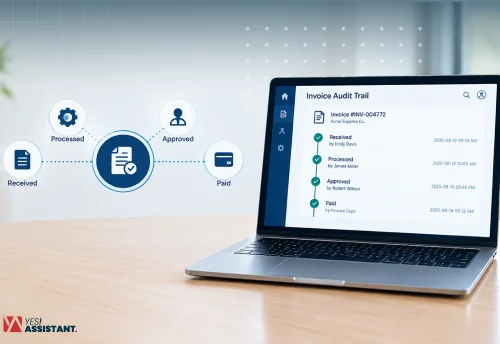

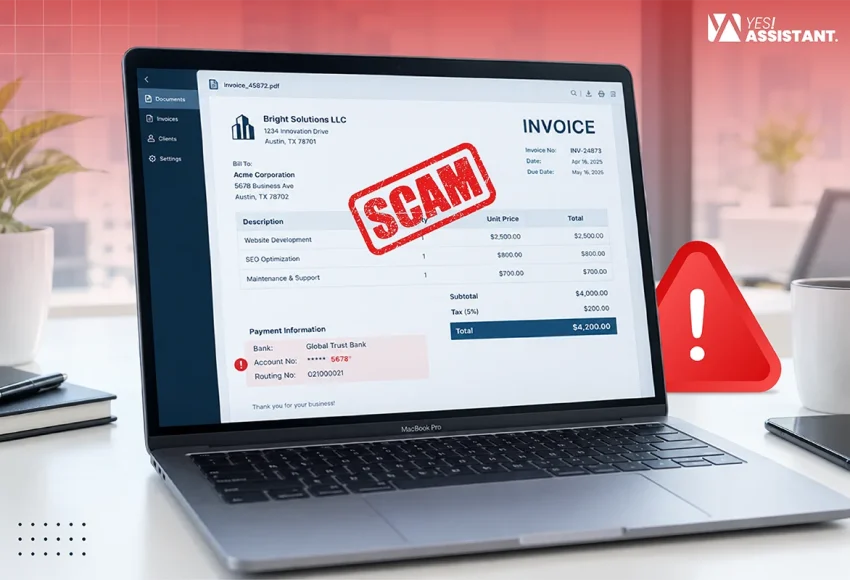
How to Avoid Invoice Scams: 8 Useful Techniques
Key Takeaways
- An invoice scam is a type of fraud activity that is usually performed by sending fake, duplicate or inflated invoices to a business or individual.
- Common methods of invoice scams include vendor impersonation, false invoicing, duplicate invoices, and internal fraud.
- Common types of invoice scams include fake invoice submission, duplicate invoice submission, business email compromise (BEC), and bank detail fraud.
- Some of the common signs of invoice scams include invoicing without purchase orders, bank detail changes, and unusual amounts in invoices.
- A business should have several safety measures to avoid invoice scams, including establishing a vendor verification process, using 2-way and 3-way invoice matching, and separating invoice approval from payment authorization.
Invoice scams are a very common form of fraud that a business may encounter. Businesses that become victims of this type of fraud usually take immediate steps to recover their financial losses. But many of them can’t fully recover the losses caused by it.
Research conducted by Forbes shows that middle-market companies lose $280,000 on average due to invoice scams. The finance or accounts payable team often reports multiple attempts at invoice fraud on their business. A study reviewing $500 million in customer invoices found that 8.5% of invoices that companies receive were duplicates.
What is an Invoice Scam?
Invoice scams include sending fake, duplicate or inaccurate invoices to collect money from a business or individual. This type of fraud is also known as payment fraud or mandate fraud. Businesses of any size can be victims of invoice scams. For example, Amazon once became a victim of this fraud, where the scammers successfully managed to collect $19 million by using fake invoices.
How Invoice Scams Work
Scammers use several techniques to obtain money from a business by creating fake invoices. Sometimes a trusted vendor or employee can also attempt invoice fraud. Here are some common techniques scammers can use to deceive the finance or AP teams:
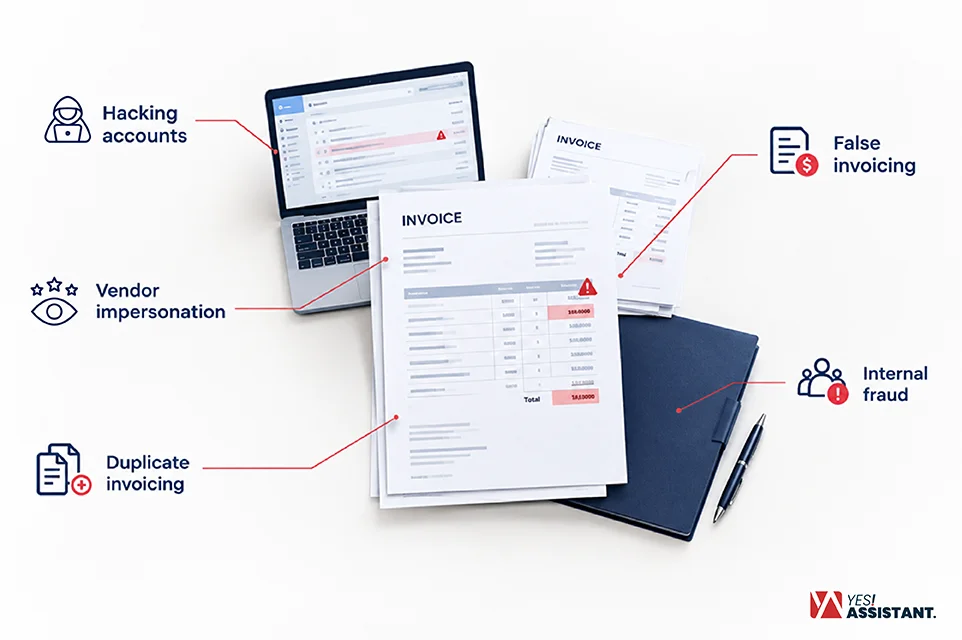
- Hacking accounts to access confidential information such as purchase orders, transactions, vendor lists and banking information.
- Vendor impersonation, which means sending a deceptive message or fake invoices to a business.
- Duplicate invoicing that includes sending the same invoice multiple times to obtain money from a business.
- False invoicing by a vendor, which may include activities such as changing the invoice price, quality or total amount in an invoice to deceive the AP team.
- Internal fraud, where an employee or someone from the inside of a business helps an external party process a fake, duplicate or false invoice.
Common Types of Invoice Scams Targeting Businesses
The most common types of invoice scams a business may face usually include the following:
| Type | How It Works | Warning Sign |
| Fake invoice submission | The attacker creates a fake invoice that may look like an invoice created by a trusted vendor. | No matching PO or service record |
| Duplicate invoice submission | The same invoice is submitted more than once. | Repeated invoice number or amount |
| Business email compromise (BEC) | Also known as a fake invoice scheme, where scammers take control of the vendor’s email account to send fake invoices. | Unusual email or payment request |
| Bank detail fraud | Payment information is changed to redirect funds. | Unexpected bank account change |
| Inflated invoice | The invoice amount is higher than agreed. | The amount does not match the PO or contract. |
Warning Signs to Identify Invoice Scams
Businesses can protect themselves from scams during invoice processing if they have strong knowledge about identifying attempts at invoice fraud. The AP team of a business should strictly follow some basic safety measures before accepting an invoice and routing it for approval.
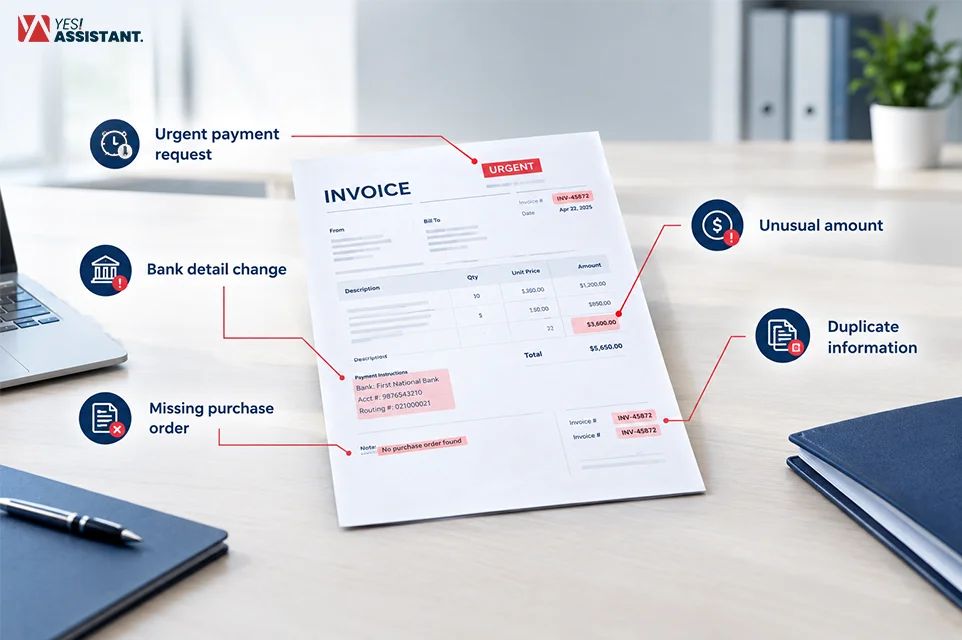
They should look for the following signs when they receive an invoice or payment request:
| Red Flag | What to Check |
| Urgent payment request | Whether the request bypasses the normal approval process |
| Bank detail change | Whether the change was independently verified |
| Missing purchase order | Whether the purchase or service was authorized |
| Unusual amount | Whether it matches the PO, contract or agreed rate |
| Duplicate invoice | Whether a similar invoice was already processed |
8 Useful Techniques to Avoid Losing Money from Invoice Scams
Checking invoices to see whether they are sent with a fraudulent intention can give you basic protection from scams. There are also some other safety practices you must strictly follow to avoid becoming a victim of invoice fraud:
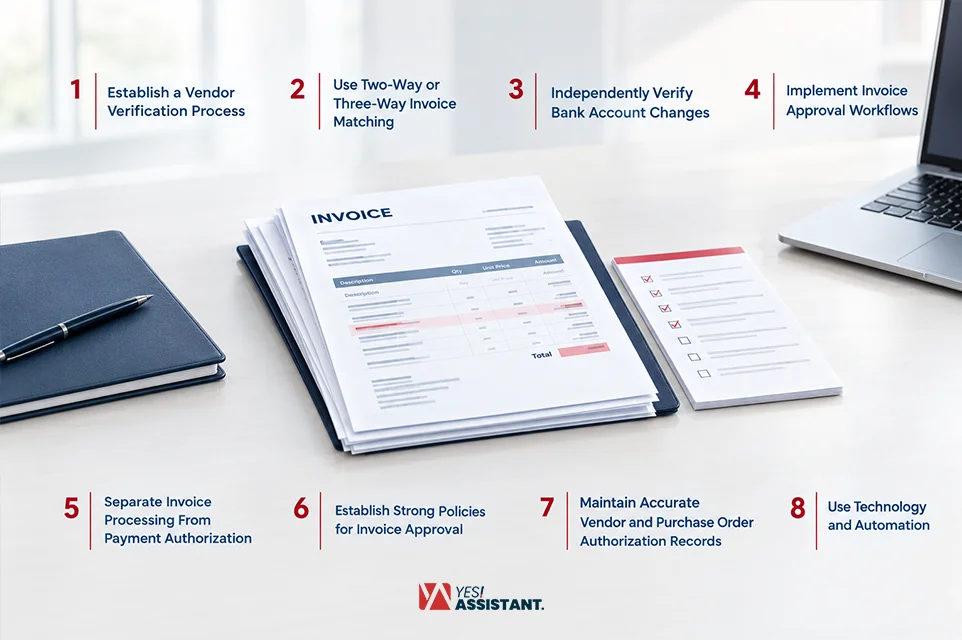
1. Establish a Vendor Verification Process
Vendor verification is a process that includes checking vendor information such as name, address and company details. Businesses usually keep a vendor list or master vendor records, and when they receive an invoice, they should match it against the vendor records. If the vendor information on an invoice doesn’t match the existing vendor records, then it may be a red flag. A business should ensure that the vendor information in an invoice is accurate before processing it for payment.
2. Use 2-Way or 3-Way Invoice Matching
Invoice matching is the process of checking an invoice against a purchase order (PO) and some other documents. There are two different methods: 2-way and 3-way invoice matching, which the AP team or invoice processing services use to check if the information on an invoice is accurate.
2-way matching checks an invoice against a purchase order and 3-way matching compares invoices against a purchase order and receiving report. A business should compare 2-way vs. 3-way matching before choosing a method for validating invoices.
3. Independently Verify Bank Account Changes
Sometimes, invoice fraud occurs when businesses trust the message or email sent by a scammer about the bank account changes. If this happens to you, then you should verify the change independently rather than relying on the documents or contact information provided in the request. To do this, you can use the vendor’s contact information in your records and verify whether they really changed their bank account before approving an invoice.
4. Implement Invoice Approval Workflows
Some businesses may not have an established workflow for invoice approval. They just accept and approve the invoices if it looks legit to them. This type of practice can increase the risk of invoice scams. Businesses should use a standard workflow for invoice processing and approval.
They should verify the invoices with 2-way or 3-way matching. They should also check if anything looks suspicious, such as inconsistent logos, formatting, vendor details or generic payment instructions. A standard workflow is necessary to detect fake invoices or payment requests.
5. Separate Invoice Processing From Payment Authorization
Processing the invoice and authorizing payment at once can increase the risk of invoice scams. Some internal employees may help scammers to create fake invoices and process the payments. Payment authorization should be separated from invoice processing for this reason.
When there is a different team responsible for payment authorization, the risk of approving duplicate, fake or inaccurate invoices can be reduced. It is because those who authorize payments can also check if everything looks fine in an invoice before processing it.
6. Establish Strong Policies for Invoice Approval
Weakness in implementing invoice approval policies can increase the risk of invoice scams. A business must have well-defined policies for invoice approval. A strong invoice approval policy should include:
- Invoice matching system: How invoices will be matched against purchase orders, vendor lists and receiving records to confirm whether the goods or services were actually delivered.
- Approval Thresholds: Define the roles and departments responsible for approving invoices based on the transaction value or approval limit.
- Verification rules: It includes the key information that must be verified and confirmed, such as vendor information, invoice amount, payment terms and supporting documents.
- Approval timeline: Set a standard timeline for invoice approval based on invoice type and approval threshold to avoid invoice processing mistakes caused by fake urgency from scammers.
- Exception handling: Clearly define how discrepancies, incomplete invoices and unusual transactions or payment requests must be reviewed and resolved before payment.
- Segregation of duties: Define rules for separating the invoice verification, approval, and payment authorization processes to reduce the risk of internal fraud.
7. Maintain Accurate Vendor and Purchase Order Authorization Records
Accurate vendor and purchase order authorization records are useful for the AP team to detect fake invoices. A business should regularly audit its vendor list and check whether the information is still correct. The business should also maintain a purchase order authorization record to track who approved a purchase order. After submitting an order to a supplier or vendor, they should log it in the purchase order authorization records. They need to update the record if there is any modification to the purchase authorization order, such as changes in the price, payment terms or quantity.
8. Use Technology and Automation for Invoice Processing
Technologies such as OCR can be used for extracting information from invoices, and businesses can upload that information to an automated matching system to detect duplicates and discrepancies. Some businesses decide to automate invoice processing systems to reduce the risk of invoice fraud. They can also use an AI-powered invoice automation system to flag invoices and payment requests that look suspicious.
Conclusion
Invoice scams are a very common form of fraud that can cause financial loss to a business. Businesses often become victims of invoice fraud when their AP team doesn’t properly verify and approve invoices. This is why businesses need to strictly check their invoices against the vendor records, purchase orders, and other records before processing. They need to know how to implement technology and automate workflows for invoice processing, which can be very useful for detecting attacks from scammers.
FAQ
What are the most common signs of an invoice scam?
Some of the most common signs of invoice scams are urgent payment requests from vendors, information mismatches with vendor records or purchase orders, inflated amounts, and duplicate invoice records.
How can businesses verify whether an invoice is legitimate?
A business should have a 2-way or 3-way matching system to verify whether an invoice is legitimate. A 2-way system matches an invoice with a purchase order and a 3-way matching system matches it with a purchase order and a receiving record.
How does three-way matching help prevent invoice fraud?
A receiving record confirming that the goods or services were received to prevent invoice fraud.
How can businesses prevent duplicate invoice payments?
Businesses should check invoice numbers, vendor details and amounts, and they can also perform automated duplicate checks.
Can automation help detect invoice scams?
Yes, automation technologies that use OCR and AI can extract text from invoices and then match it against existing records. AI-powered automation can also detect suspicious invoices or payment requests. The AP team can manually review the suspicious invoices or payment requests with automation tools.