
How to Clear an Invoice Backlog: Effective Steps and Benefits
Key Takeaways
- Invoice backlog means the build-up of invoices that haven’t been processed within their regular timeframe.
- Some of the reasons for which invoice backlog can occur in a business include high invoice volume, manual invoice processing, approval delays, and AP staff shortage.
- A business should follow a systematic approach to clear an invoice backlog, which includes assessing and categorizing invoices, prioritizing pending invoices, resolving invoice exceptions and allocating additional resources.
- Some major benefits of clearing an invoice backlog are improved cash flow, stronger supplier relationships, reduced late payment risk and lower AP workload.
- Invoice automation and outsourcing services can help you process invoices faster than your AP team.
Delays in processing invoices can have a significant impact on a business’s cash flow and vendor relationships. This is why the accounts payable department of a business needs to be careful about pending invoices and process them without delay. A study shows that about 60% of businesses experience invoices being paid late. When a business has an invoice backlog, it should address it by improving its accounts payable workflow, and in this blog, we are going to discuss how to do that.
What Is an Invoice Backlog?
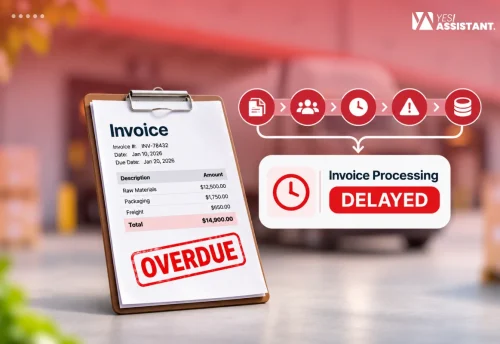
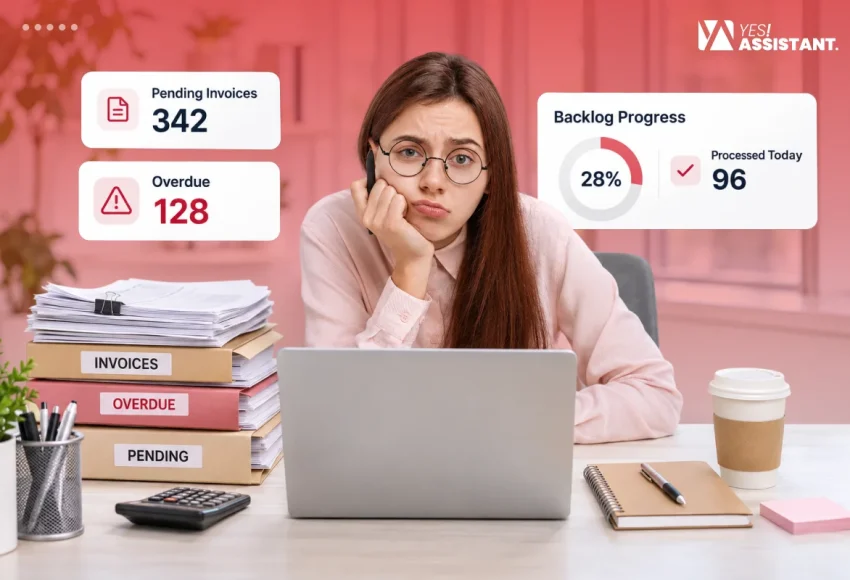
An invoice backlog is a situation where a business accumulates many invoices that they couldn’t process within their regular timeframe. Vendors can include a date in their invoices by which a business needs to send their payments. When there is no payment date on an invoice, it is usually considered that the business has to pay within 30 days of receiving that invoice.
There are several consequences a business can face when it can’t process invoices on time, such as:
Missing early discounts: Businesses that pay a vendor shortly after receiving an invoice often get an early payment discount. For example, a vendor can mention that a 5% discount on the total amount is applicable if paid within 3 days.
Paying late fees and interest: Some vendors can charge late fees and interest for delayed payments. For example, a vendor can write that a $20 fee or 2% late payment fee will be applicable after a specific date. They can also charge annual interest based on the daily or monthly due amount.
Poor vendor relationship: Delays in invoice processing can damage trust and the relationship with a vendor. They can also hurt the credit rating of a business. Vendors often impose stricter terms and conditions on a business with a poor credit score.
Cash flow disruptions and capital management: An invoice backlog can disrupt the healthy cash flow in a business. This is because a large number of pending bills from the past can create an imbalance between incoming and outgoing money. The business can have difficulties in maintaining its working capital.
How Can an Invoice Backlog Build Up in a Business?
A business can usually have an invoice backlog due to manual processes and inefficiencies in its accounts payable or invoice processing workflow. However, some of the major causes of an invoice processing backlog are the following:
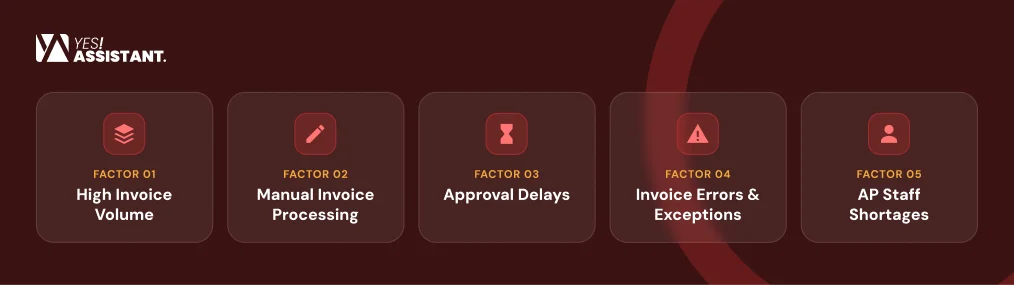
High Invoice Volume
A business may need to handle a high volume of invoices due to sudden procurement decisions or when it is growing its operations. An invoice backlog can be created in such cases. Some businesses choose invoice processing services to prevent backlogs caused by this type of reason.
Manual Invoice Processing
The invoice processing workflow follows a step-by-step approach. The accounts payable or invoice processing team needs to capture invoice data, assign GL coding, validate invoices and route them for approval. Handling all these tasks manually can cause delays in processing invoices.
Approval Delays
Some businesses can have an invoice backlog due to approval delays. This can happen when an approver doesn’t get notified or the system is disconnected. Sometimes, poor administrative support can also slow down decisions in a business and increase the time for invoice approval.
Invoice Errors and Exceptions
The AP team of a business needs to check for errors and discrepancies in invoices before processing them for payment. They need to know how to report invoice errors and exceptions to a vendor quickly. Sometimes, they should take additional time for the invoice process if it is necessary to handle an exception in an invoice. An invoice backlog can occur if the accounts payable team is not efficient enough in reconciling and resolving invoice issues.
AP Staff Shortages
Sometimes, a business may have an invoice backlog due to having a small AP team. It may grow in size and operations but not hire additional accounts payable staff. This type of problem can also be responsible for accumulating pending invoices in a business.
What Steps Can Businesses Take to Clear an Invoice Backlog?
Clearing an invoice backlog doesn’t only require speeding up the invoice processing workflow. You need to categorize the pending invoices based on priority. Then, take steps to process the invoices and solve the issues responsible for causing the backlog.
Here are some effective techniques you need to follow for processing the pending invoices in your business:
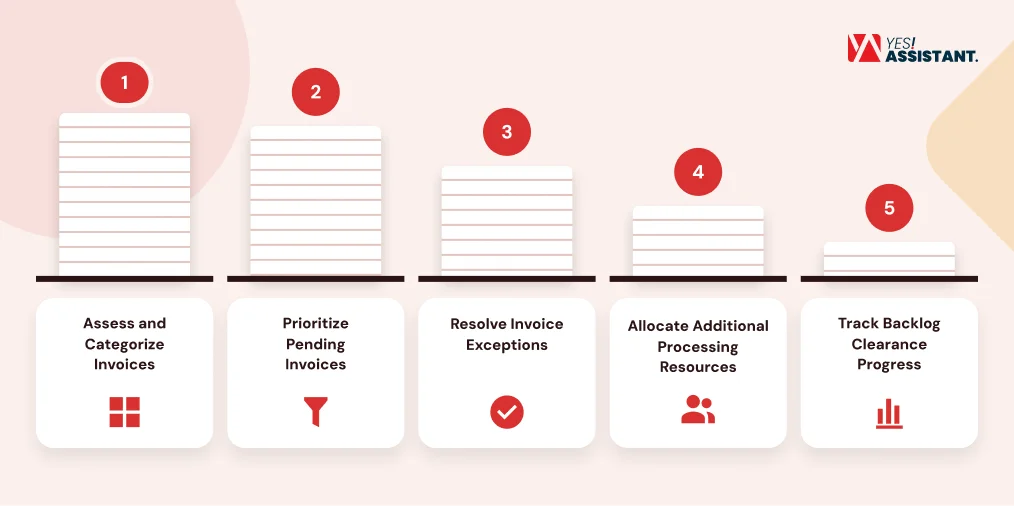
Assess and Categorize Invoices
When you have a lot of pending invoices, first you need to sort them based on due date or urgency. Then, you need to categorize them based on the causes of delays, such as waiting for approval, missing a purchase order or needing correction. There might be hundreds of invoices piling up for payment, but among them, you need to choose the ones that are long overdue and most urgent to process.
Prioritize Pending Invoices
After categorizing, you need to know how to set priorities for the invoice process. Some of the major factors you should consider:
- Due date: Select the invoices that are closer to the deadline to avoid paying late fees or missing discounts.
- Vendor relationship: Process payments that can cause a vendor dispute or impact the relationship with a supplier who delivers critical goods or services.
- Invoice value: High-value pending invoices can incur a significant amount of interest and late fees, so you need to clear them with priority.
- Business urgency: Sometimes a vendor can request that you clear their payments, or you may need to prioritize some payments as part of your operational requirements.
Resolve Invoice Exceptions
Some discrepancies in an invoice should be resolved by the supplier. Exceptions such as missing tax data, incorrect quantity or amount and blank fields should be corrected by a vendor. Some exceptions can also be handled with technologies such as OCR and automated matching systems. For example, if you are having difficulties matching invoices with a purchase order, you can use automated matching software. Some matching software can perform 2-way and 3-way matching for all incoming invoices. So, you should also try to automate the invoice processing in your business.
Allocate Additional Processing Resources
A backlog can also be resolved by using additional staff for invoice processing. There are many invoice processing and AP processing services you can use to clear the backlog. They can handle your invoices efficiently while you can focus on other tasks.
Track Backlog Clearance Progress
After taking steps to clear invoice backlogs, you should continuously monitor their progress. You need to find out whether the team is clearing and prioritizing the invoices properly. New backlogs can often build up while the AP team works on processing the previous invoices. This is why you also need to focus on new invoices and process them within the due date.
Benefits of Clearing Invoice Backlog
The accounts payable team of your business can perform other activities more efficiently when there is no backlog of invoices. Businesses can improve their relationships with vendors and maintain a good credit score.
Some of the key benefits of clearing the invoice backlog are the following:
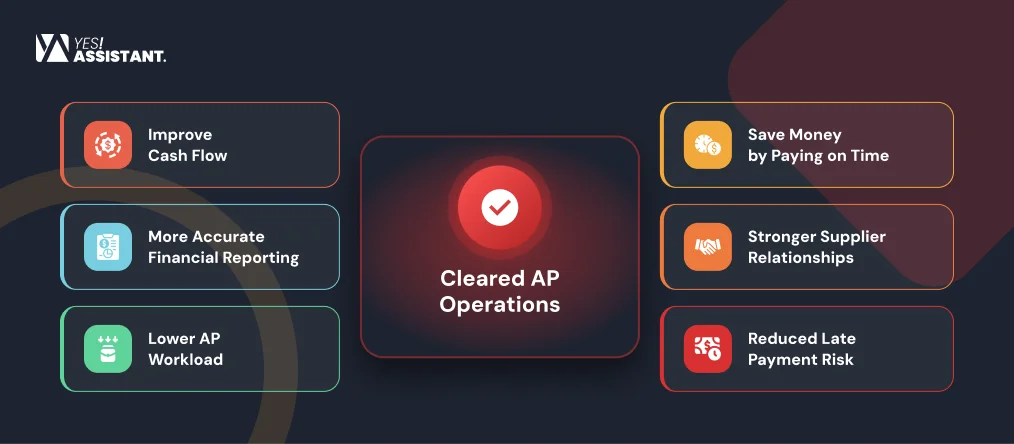
Improve Cash Flow
Businesses can maintain a healthy cash flow by processing invoices within the regular payment window. A business can balance its incoming and outgoing expenses more accurately when it doesn’t need to frequently follow up on pending bills.
Save Money by Paying on Time
Vendors often give early discounts to buyers who pay them quickly. A business can also avoid paying late fees and interest on the due amount by submitting invoice payments on time.
Stronger Supplier Relationships
Vendors prefer to supply goods and services to customers who pay them without delay. A business can often get its orders fulfilled quickly when it has a good reputation for paying on time. It can be very useful for getting a response to emergency procurement requests.
Reduced Late Payment Risk
Clearing invoice backlogs by processing overdue invoices helps you focus on new invoices. The AP team of your business gets more time to validate them and handle exceptions in incoming invoices. They can solve any issues quickly and process them while the window for paying without late fees is still open.
Lower AP Workload
The accounts payable team of a business needs to handle several activities other than invoice processing, such as cash application, account reconciliation and financial reporting. The AP team can experience burnout due to task overload when the number of pending invoices becomes too high. Clearing the pile of overdue invoices reduces the workload and stress of the AP team.
More Accurate Financial Reporting
Unpaid invoice amounts can increase the true liability of a business, and they can make the existing cash balance appear inflated. Sometimes, the finance and accounting team may have difficulty understanding their liability and AP balances when there is a large invoice backlog. This is because some liabilities may go unreported by the AP team. The risk of discrepancies in financial reports can increase.
AP Automation and Outsourcing for Clearing Invoice Backlog
AP automation can help a business capture, validate and approve invoices faster. There are many software programs that businesses can use for AP and invoice processing, such as Tipalti, Stampli and Bill. Automated invoice processing systems use AI, OCR, and machine learning to handle invoice processing tasks faster than humans. It can also help a business reduce the cost of invoice processing. Research showed that by using automated systems, it can take a team about 3 days to process an invoice where manual process can take about 17 days.
Using outsourcing can also be a good choice for clearing invoice backlogs, especially when you have a small AP team. AP outsourcing services usually have expert professionals in their team who sort your invoices based on their value and urgency to clear backlogs. They can also help identify the gaps in your invoice processing workflow, which cause inefficiencies and operational bottlenecks.
Conclusion
Invoice backlog can have a significant negative impact on the financial health, cash flow, and vendor relationships of a business. Businesses can often have overdue invoices piling up due to several reasons, such as lack of automated systems, inefficiencies in handling exceptions, approval delays, and others. The AP team in a business needs to know how to sort and categorize their invoices so that they can correct any discrepancies in pending invoices faster. They can also take the help of automation and invoice processing outsourcing services when they need high-volume processing.
FAQs
How do you clear an invoice backlog?
You need to sort and categorize your invoices to clear an invoice backlog. Then, you need to set priorities for processing invoices based on specific criteria.
How should you prioritize invoices in a backlog?
Some of the key criteria to consider when prioritizing invoices in a backlog include invoice amount, due date and urgency.
Can AP automation help reduce an invoice backlog?
Yes, AP automation can help process invoices faster by using technologies such as OCR and automated matching systems. Automation can reduce the average time it takes to process invoices, which can be very useful for clearing invoice backlogs.
Can a BPO company help clear an invoice backlog?
Yes, a BPO company or invoice outsourcing service can help you clear an invoice backlog with its expert team. They can handle invoice exceptions faster and identify inefficiencies in your existing invoice processing workflow.
How can businesses prevent invoice backlogs from building up again?
A business needs to track backlog clearance progress to prevent an invoice backlog from building up again. They need to focus on both overdue invoices, which are being processed after resolving exceptions, and incoming invoices, which also need to be processed.