
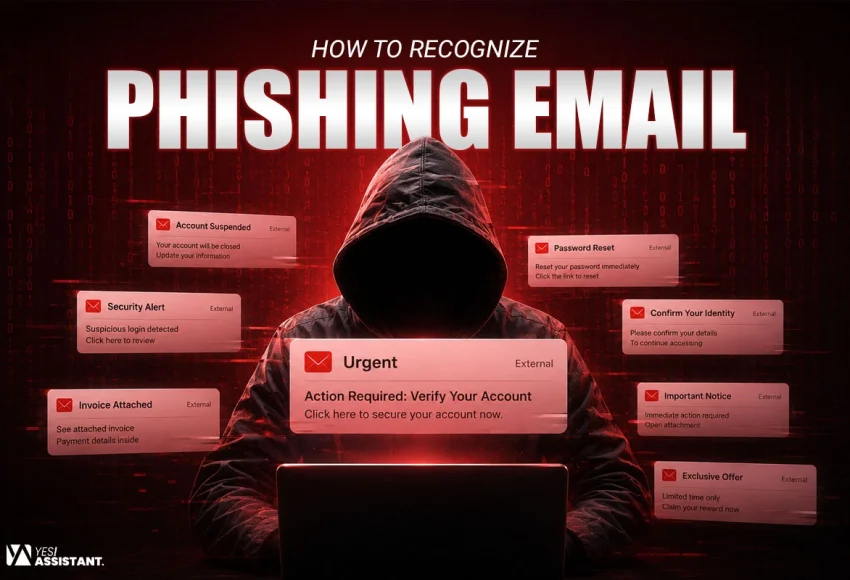
How to Recognize Phishing Emails: 10 Warning Signs You Should Never Ignore
A phishing email is defined as a fraudulent attempt to steal your financial or sensitive information. This is like a password, financial data by Musk as a trustworthy entity in digital communications.
In advanced and sophisticated cyber threats, understand how to identify these deceptive techniques. Significantly, this is mandatory to maintain digital security and protect your business.
What is a Phishing Email?
A phishing email is a fraudulent message crafted to deceive the receiver in order to steal sensitive information. These deceptive messages are designed to steal passwords, credit card information, payment app passwords, or login credentials. This is just tricking users into thinking that email comes from legitimate sources like your bank, government agency, or reputable online services.
Why Recognizing Phishing Emails is Critical
Recognizing phishing emails is the primary defense against cyberattacks because technology has some limitations. Also, the system is often unable to block every threat. The reason why phishing emails are crucial:
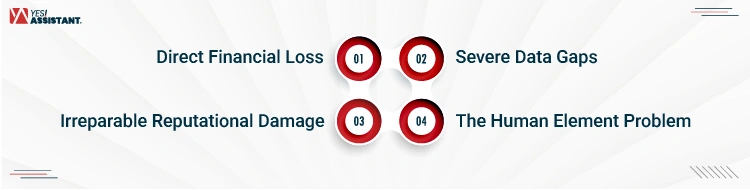
Direct Financial Loss
Usually, phishing emails are a social engineering trick; attackers steal banking credentials for your business or personal accounts instantly. In the finance sector, the attackers dodge employees, such as sending huge company funds using fake work emails.
- The criminal locks your computer.
- Steals your financial information.
- Demand expensive payouts to recover data.
Severe Data Gaps
Criminals often steal your login passwords to access sensitive cloud storage and databases. These attackers also capture your social security number, tax records, and medical data to commit fraud.
- This mainly occurs at your competitors or a group.
- Tricks you into grabbing your property software or trade secrets.
- Often steals your sensitive information to create data gaps.
Irreparable Reputational Damage
You may recover internal threats, but if your customer knows about your failure to protect their private information, it really damages their reputation. A successful phishing attack permanently damages your company’s market reputation.
- Face massive compliance files under the regulatory team.
- This is a failure to protect business data as per GDPR or HIPAA rules.
- Face a series of regulatory audits or permanently lose business.
The Human Element Problem
Your internal security software may handle spam emails, but it is unable to detect advanced phishing emails. Your employees are the target of hackers, who use your weakness to get benefits.
- Give a deep look at fake emails quickly.
- Train employees to track advanced fraudulent emails.
- Update your security software to protect sensitive data.
10 Warning Signs of a Phishing Email and How to Recognize It
Phishers constantly update their stealing techniques. Spotting one of these red flags can protect you from destructive cyberattacks. See the 10 signs of examples on how a phisher beats you by sending an identical copy.
1. Suspicious Sender Address or Domain
Most of the time, professionals are busy with regular work. By this time, similar domain names come to your attention and steal your valuable information.
- Tricked Brand Names: Attackers use look-alike domains with elusive typos, like create another fake domain “O” with a zero (micr0soft.com)
- Public Email Provider: Reputed organizations often use public domains to make free communication with customers, like @gmail.com or @yahoo.com.
2. Generic Greetings Instead of Personalization
Phishers don’t specific responsibles names. Therefore, they tricked me into sending emails with a generic voice. This message may come with similar domain names to enter and steal your valuable information.
- Unclear Salutations: Phishing campaigns are sent to thousands of victims at once using generic phrases. This is like “Dear Customer” or “Valued Member.”
- Dodge Linguistic Effort: Your original affiliated company must send an email with work details. Phishers must miss the core details that are signs of missing personalization points.
3. Urgent, Fearful, or Threatening Language
At the time of your crucial work time, you open your inbox and see an “Urgent” email.
- Artificial Scarcity: An email arrives with “Act Now” or “Account suspended in 24 hours” that triggers you with panic.
- Emotional Manipulation: Your absent mind, filled with fear due to a phishing email, forces you to act immediately without thinking or checking the legitimacy.
4. Unexpected Attachments or Links
Any kind of unexpected links or attachment cause you to lose your passwords or important information.
- Unsolicited Files: Be careful before clicking on unexpected invoices, receipts, or shipping documents delivered with attachments.
- Dangerous Extensions: Always avoid opening files in risky extensions like .zip, .exe, and micro-enabled .docm files.
5. Too Good to Be True Offers or Rewards
Scammers or phishers message names with popular brands to provide attractive offers or Rewards.
- Fake Lotteries: Allure you into believing that you won a contest, lottery, or giveaway from reputed companies or a popular figure.
- Unearned Bonuses: Send Requests to claim government payouts, corporate bonuses, or gift cards to steal your valuable data.
6. Poor Grammar, Spelling, and Formatting
While reading mail, if you find poor grammar, spelling, or misaligned formatting, are the major sign of a phishing email. Cybercriminals use these tricks to bypass spam filters. Only fools are not attentive to the issues.
- Low-Quality Writing: Remember, a professional company has qualified employees who check typos properly. Thus, consider frequent typos, broken English, and awkward phrasing pointing directly to scammers.
- Flawed Visuals: Poorly designed log, low-graded font style, and poor template are clear signs of a phisher’s attack.
7. Unusual or Sensitive Requests
When you find a message with a usual case or containing a sensitive request, avoid it. This content tries to trick you into sharing private data or sending money.
- Credential Harvesting: Remember, the IT department and bank never ask you to provide your password, PIN, or social security number.
- Process Bypasses: Avoid emails based on standard verifications to purchase gift cards or transfer funds.
8. Hidden or Mismatched Hyperlinks
Cybercriminals use hidden hyperlinks or mismatched links to trick you and get you trapped under their plan.
- Deceptive Text: Linked with wrong hyperlink text like ://yourcompany.com, but this reveals a malicious destination.
- Shortened URLs: Phishers often use URL shorteners (like bit.ly or tinyurls), which majors sign to hide the final and fraudulent destination.
Phishing emails often use fake footers to trick you. When you find mismatched information, like missing contact details or errors in signatures. The footer is one of the easiest places for scammers to make mistakes.
- Missing Contact Info: Authentic corporate emails contain legal disclaimers, physical address, and unsubscribe options in the footer.
- Outdated Copyrights: The phishing template forgot to update the footer, displaying old copyrights.
10. Request for Immediate Financial Action
Send you messages to take immediate action, like sending more information, causing the expiry of your digital assets. Any kind of urgent request without legitimacy can lead to stealing your asset.
- Unverified Invoices: An email that demands instant payment for an unrendered service or an unknown vendor contract.
- Alternative Payment Methods: Scammers always favor untrackable payment methods. This is like cryptocurrency, wire transfers, or gift cards.
Identifying phishing requires time and effort. Most of the businesses hire a remote assistant service to secure sensitive information. Thus, you become free from burnout and get more time to spend time on business growth.
How to Avoid a Phishing Attack
It’s a smart way to avoid unexpected phishing attacks by verifying the sender’s address. Check links before you click on unexpected messages and use multi-factor authentication (MFA). Significantly, MFA needs a password and a second code.
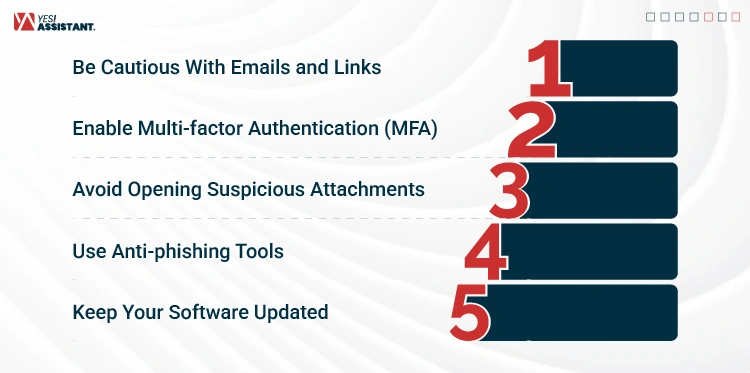
This certainly blocks hacker access to your account at every step they try to steal your password.
Be Cautious With Emails and Links
Be careful, and match the exact email address. Importantly, phishers use fake names or misspelled domains. Type the web address directly into your browser without clicking email links.
- Click to check the sender’s address.
- Monitor email by moving your cursor.
- Never send your personal information.
Enable Multi-factor Authentication (MFA)
Protect your online accounts using an authenticator app or a hardware security key. MFA recognizes authentication by which you can clearly identify hackers and stop login at your platform or device.
- Use an authentication app.
- Set your backup code.
- Set up a recovery option.
Avoid Opening Suspicious Attachments
Be alert and think twice before opening files from unknown sources. Even files from friends can be unsafe if their accounts were hacked. Try to delete emails permanently and never interact with scam docs or files.
- Check sender legitimacy.
- Save and scan documents.
- Never enable micros.
Use Anti-phishing Tools
It’s better to install a standard antivirus program. Many advanced tools have built-in anti-fishing filters that block fake websites automatically.
- Turn on automated settings.
- Be attentive to software warning alerts.
- Use authorized or licensed tools.
Keep Your Software Updated
Always keep your tools and software updated for your phone, computer, and web browser. Update to fix security flaws that hackers use to steal your device.
- Turn on your device’s automatic updates.
- Restart your devices weekly
- Use only the official app store.
Conclusion
Cybercriminals have become advanced enough to steal high-tech software and tools. Self-awareness and attentiveness are vital to your personal assets or company assets. Moreover, security software provides necessary layers of protection, but being attentive remains the most effective defence against potential threats.
Consistently check the sender address, verify links before clicking, and apply multi-factor authentication (MFA). Authentication helps you to avoid risks. You must be proactive to protect your digital assets and maintain a security-first mindset in all your online interactions.
FAQ
1. What’s the difference between phishing and spam?
Spam email is junk mail sent to thousands of people. These are common messages sent to thousands of physical mailboxes. A phishing email is a dangerous scam where criminals build trust to send emails from genuine sources.
2. What’s the most dangerous type of phishing?
Spear phishing is highly dangerous because it targets specific individuals or organizations. Cybercriminals spend time researching high-profile information before sending persuasive and personal messages.
3. How can I quickly check if a message is a phishing attempt without slowing down my day?
To check quick messages, apply the “Sender-Link-Action” 3-Second rule. Move your mouse over the sender’s name to view the real address. Don’t click any links and watch for the urgency. Legitimate organizations hardly use threats to force immediate action.
4. Can phishing emails come from trusted contacts?
Yes, phishing emails can absolutely come from trusted contacts. Cybercriminal hacking targeted a person’s reliable friends or partners’ information before sending a phishing email.
5. Are phishing emails still easy to recognize?
No, Phishing emails are not easy to recognize these days. Cybercriminals use Artificial Intelligence (AI) to write accurate, personalized messages using exact brand logos and email addresses.