

What Productive Businesses Do Differently: Secrets You Must Know
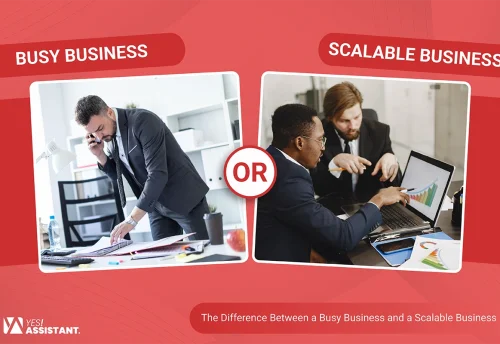
Some companies grow fast while others stay jammed. There are specific reasons why some succeed and others do not. It is because they know a secret, like being busy is not the same as being productive. Most people spend their day running in circles, but top business owners know how to stand still and focus on high-values.
In this guide, you’ll learn on how best team wins doing less, and how to spot low-valued task that slows your business. Use 80/20 rules to make your business growing, and stop getting tired and start seeing actual growth. It’s time to change how you look at your “to-do” list.
How to Build a System Over Solving Problems
A building system is a proactive process of creating routines, automating repetitive tasks, and establishing rules to eliminate micro-decisions. This system building focuses on weekly planning rather than daily crisis management, batch similar tasks to reduce cognitive lead and delegate decisions. Thus, you can save mental energy for high-priority tasks.
The Architecture of Productive Workflows
Design automated workflows that work every time. This gives relief from depending on self-decisions, and turns a one-time task into a smooth, efficient routine. To architect a productive system, identify and remove unnecessary steps rather than use automation to reduce manual work.
These workflows focus on long-term, and sustainable solutions for a growing business.
- Map Current Workflows & Pain Points: Keep documents on your current process and identify where things break down or slow down.
- Define System Boundaries: Define clearly on what is inside and outside of your system that help users to avoid unnecessary difficulties.
- Standardize and Automate: Standardize routines to ensure consistency and use tools like, CRM, project management software to automate your manual, and repetitive steps.
- Implement Feedback Stages: Conduct regular reviews, measure and take steps to improve the system.
- Apply Micro-Approaches: Break large systems into tiny, independent and modular parts to make them easier to manage, test, and improve.
Eliminating Decision Fatigue
When you make constant small decisions that exhaust your mental energy. Especially when you are making strategic decisions. For entrepreneurs, this often occurs due to inbox overload, reactive days and putting off revenue-driving decisions.
- Prioritize Needs and Essentials: Focus on prioritizing quality sleep, perform a quick brain dump and prepare essentials to reduce decision fatigue, and start next focused.
- Reduce Procrustination: Address the most challenging, high-impact task to make your morning stress-free from “to-do” list.
- Optimize High Energy: Schedule critical tasks for the first few hours of the day to optimize your brain’s peak, early-morning alerts.
- Reduce Email Overload: Group your email with concise, relevant and correspond to important email. Reduce unnecessary emails and unsubscribe irrelevant senders.
A system only works if someone is running it. Instead of manually “batching emails” or “mapping pain points,” allocate tasks to a remote virtual assistant, who follows the rules you’ve established. This ensures the system runs in the background while you focus on high-level strategy.
The Power of Strategic Operational Deduction
This is like a big phrase, but it is actually very simple. Strategic operational deduction means looking at everything that businesses’ does and cutting out the parts that don’t help you to grow.
Productive businesses use this method to stay simple and swift. Instead of trying to do everything, they subtract the noise; thus, and focus on the signal.
The 80/20 Rule in Modern Business
A small part of your work usually brings in most of your money. This is called the 80/20 rule.
- Focus on the Best: Your 80% of success usually comes from only 20% of your tasks.
- Ignore the Rest: You spend less time on work that doesn’t lead to more sales or make customers happy.
- Find the Winners: Great business looking for specific actions, like talking to top clients or building new products. Which has the biggest outcomes.
- Double Down: Once your team members find what they need to do, they put all their energy there.
Saying No to “Low-Value” Busywork
Busywork is the “fake work” that feels important but actually keeps you stuck. It includes things like organizing folders for hours or checking social media comments constantly.
- The Trap of Small Stuff: Constantly performing easy tasks can make you feel productive. But this is how admin tasks silently kill productivity by removing your energy while engaging in big goals.
- Setting Boundaries: Business owners always say “no” to meetings that don’t have clear objectives or goals.
- Handing it Off: If a task is simple but takes a long time, you can assign someone else to do it. Another way, use a tool to integrate the task automatically.
- Apply the “Big Three” Rule: Choose three important tasks to do everyday. Keep another else in the queue.
How Productive Businesses Build Scalable Teams
Most companies think that being “busy” means they need to hire more resources. But productive businesses never think like this, they just look at work at their hidden jams, and hire some to release them. Instead of just taking others’ help, they focus on operational advantage, getting work done with the same amount of effort.
Hiring to Fix the “Traffic Jams”
In a commercial business, when the process slows down, the owner usually hires a general assistant. A productive business does the opposite. They look at their data to find the exact spot where work stops moving.
- Target the Bottleneck: Owners find the exact spot that is holding everyone else, then start the process or hire someone to fix it.
- Remove the Block: The new hire doesn’t serve for only “help out”; they are there to make sure the workflows faster for the whole team.
- Stop the Busywork: Through fixing these jams, the business avoids the hidden workload most entrepreneurs ignore.
Designing Roles Around Winning
A productive company never writes job descriptions filled with boring lists of responsibilities. Instead, they design roles based on outcome-driven teams. They are always looking for “what is the list of tasks that lead to winning the business challenges” and build a role around the query.
- Focus on Results: Instead of saying “answer email,” the goal should be “Keep customers happy and solve their problems in under one hour.”
- Measurable Success: Take measurable steps on exactly how they are helping the company grow.
- Build Ownership Culture: When employees align with the same goal and target, they start to work harder and smarter.
Clear Priorities Drive Everything
Think of a company that has 10 directors all pointing in different directions. The business won’t operate effectively. Thus, all directors should align with a single goal, pick one direction and make sure everyone knows exactly where they are going.
This keeps your team from getting tired of tasks that don’t actually help the business grow.
Picking the Big Wins
Great businesses don’t try to do everything at once. They apply strategic prioritization to find a few tasks that have high-values and bring most success. Thereon, having sharp business focus, they only ignore tasks that create noise and focus on harmony.
- Goal Alignment: Everyone knows the same goal and starting work matches the company’s objective.
- Stop the Drifting: They dig out the signs you’re spending time on the wrong work.
- Saying No: They never allow small value of tasks, but welcome to high-valued tasks.
Making Decisions Faster
When a company grows in confidence, everybody performs smoothly. This leads to strategic executive, which just means getting the right things done quickly and correctly..
- Clear Rules: All team members know which tasks are most important for the day.
- No Waiting: Teams can move fast because they don’t have to ask for permission for the small tasks.
- Focus on Value: The business only spends energy on work that makes customers happy or makes the company stronger.
Data-Driven Decision Making
Successful businesses use facts, not guesses. Just like a pilot, businesses need a dashboard to fly a plan. Besides, a smart business uses numbers to see exactly how fast they are going to reach a targeted destination.
Watching the Clock with Turnaround Time
In a high-valued company, time is everything. They measure the time from the start to the end. This helps the business owner see how fast the work gets done.
- Speed Matters: Take faster decisions, make customers happy and keep things moving.
- Find the Delay: Numbers show exactly where a project is getting stuck.
- Better Planning: Knowing exactly how long things take helps the team to set the deadlines.
Tracking the Task Completion Rate
It isn’t enough to start a hundred projects; you have to finish them. This metric tracks how much work actually gets done. It helps prevent how task overload leads to burnout by showing when a person has too much on their plate.
- Finish Strong: The goal is to close tasks effectively, not open new ones.
- Spot the Slack: It shows which teams are winning and who need extra help.
- Clear Progress: Everyone can see the win, when the task completion rate stays high.
Measuring Operational Efficiency
It shows whether your efforts are actually productive or just being wasted. You will be sure that your team isn’t distracted by inbox chaos instead of doing the right work.
- Cut the Waste: Efficiency means completing most of the tasks within less effort.
- Smarter Work: It helps the company stop doing tasks that don’t help them grow.
- Higher Quality: When the process is smooth, the work usually turns out much better.
Conclusion
Success doesn’t come from doing a thousand small things. It comes from completing a few big projects very well. By using “Strategic Operational Deduction,” you can clear away the clutter and find the path to growth. Product businesses are the winners because they protect their names and say “no” to anything that doesn’t belong to top priority.
Take a look at your tasks for tomorrow. Apply 80/20 rules, that brings 80% results from 20% works. When you stop doing the work that has no value, you finally have the space to build a business that has high-values.