

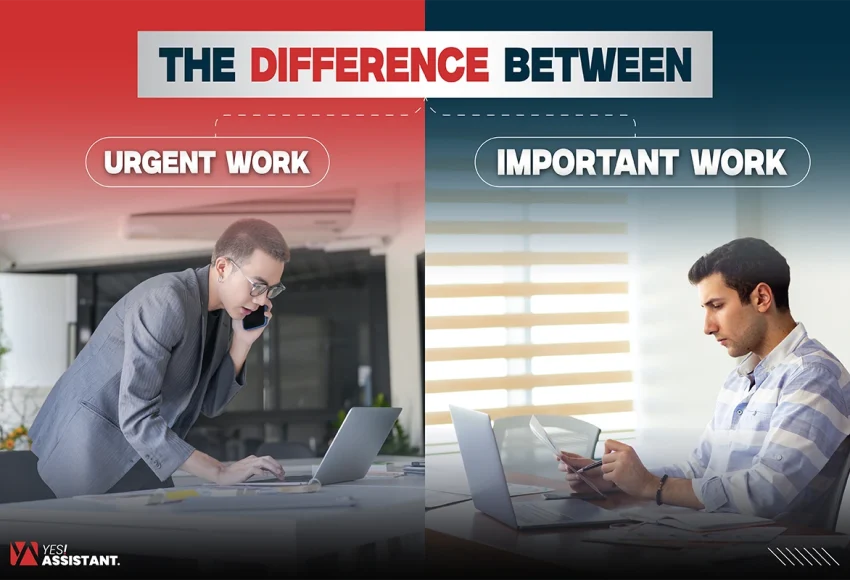
The Difference Between Urgent And Important Work: Are You Doing the Right Things?
Urgent work demand immediate execution without having long-term goals. On contrary, important work requires no emergency response but demands long-term, strategic initiative that align with your goal. Besides, “urgent work” comes from outside requirement but “important work,” plans setting for sustainable business growth.
In this blog, you will learn a clear definition of urgent and important work, differences, and matrix to help sort your ‘to-do’ list. Also, focusing on the right box from four Matrix is the secret to long-term success applying four quadrants that eliminate your work stress.
What is Urgent Work?
Urgent work is defined by the immediate demand for any action to mitigate risks or meet an absolute deadline. In a professional environment, these tasks often highlight crises or firefighting scenarios that bypass your planned schedule. This required an instant response pausing your ongoing work that may interrupt your existing service.
When driving with urgent work, you aren’t in control of your day, the schedule is in control of you.
Definition of Urgent Work
Urgent work is like a task that requires immediate action. These are the things that pop up and force you to stop what you are doing. If you are unable to handle them the right way, this means you missed deadlines or become a misleading person.
Key Characteristics of Urgent Tasks
To spot an urgent task, look at these four red flags. These explains why urgent work feels like a heavy:
- It’s a Race Against the Clock: These tasks are very time-sensitive. You aren’t thinking about next month; you are thinking about the next ten minutes.
- You Are Playing Defense: This task often becomes reactive. Instead of choosing what to do, you are responding to something that happened to you, like take initiatives when your house ignites.
- The “Pressure Cooker” Feeling: Most urgent work comes from sudden incidents or outside requirements. This usually create stress during your workday.
- Required Quick Response or Recovery: Urgent work comes from internal or external pressure. This demand may come from your bosses. company management to solve unstructured system, or an important customers to solve issues.
Examples of Urgent Work
To make your operation crystal clear, here is what urgent work looks like you’re handling in the actual case.
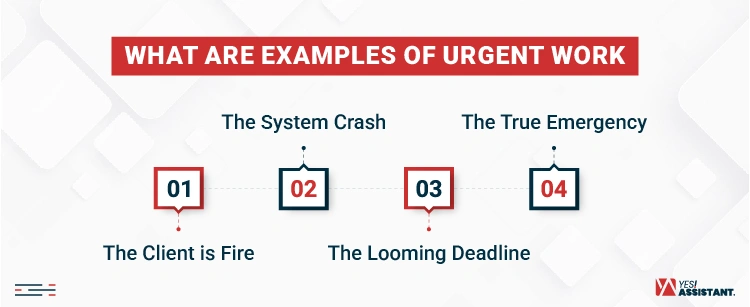
- The Client is Fire: Response to a critical email comes from a client who demands a quick reply before the meeting starts.
- The System Crash: Fixing your computer or system failure that stop everyone from working.
- The Looming Deadline: Finishing your report that has a one hour deadline.
- The True Emergency: Handling an issue comes suddenly, like a power outage or safety problem at the office.
What is Important Work?
Important work is the set of tasks that move you closer to your big, and long-term goals. While urgent work is about demanding to execute immediately, important task is about building for the next steps. These tasks are like drawing a map for a long journey; they don’t call for your attention, but without them, you never reach your destination.
Think like you are building a bridge for your business. You might carrying people across river in a small boat (urgent). Besides, you take time to design and build a bridge (important) what actually help thousands of people to cross the river easily.
Definition of Important Work
Important work is anything that helps you reach on persona growth, big and long-term goals. Means you are working with specific objectives that has wide-range of consequences in next steps. It ensures to increase revenues, enhance your business growth and make your customer happy.
For Example, It’s better to build rapport rather than handling a routine follow-ups. This is like, meeting with a major stakeholder or building long-term partnership that could lead to new business opportunities.
Key Characteristics of Important Tasks
Determine how a task is really important for you. Look for these signs:
- It Starts with a Goal: These tasks are goal-driven. You work with goal as they help you achieve a dream or a big project.
- It Focuses on Value: These tasks directly connect to your big dreams. You do them because you want to reach a specific destination.
- There is No Loud Siren: Important work isn’t included in being busy immediately. It is about choosing the right tasks that make actual difference and help to achieve long-term success.
- It Makes the Future Better: The biggest sign of important work is that it improves long-term outcomes. It builds a foundation; therefore, your life gets easier and better as time goes on.
When you ignore these tasks, you might find yourself wondering why business owners stay busy but never grow. It’s usually because they are only doing what’s loud, not what’s important.
Examples of Important Work
Here are some realistic examples of important tasks that build your future:
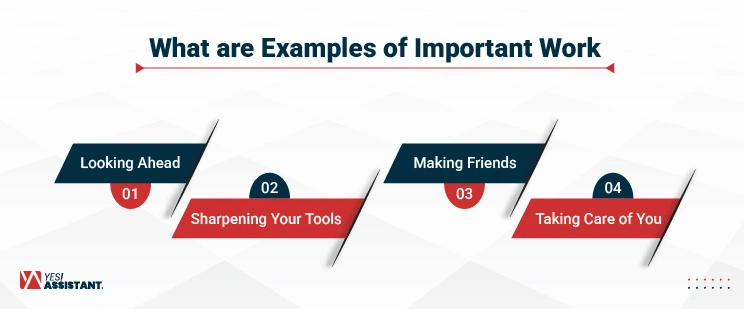
- Looking Ahead: Spending on strategic planning to decide where you want to go after five years.
- Sharpening Your Tools: Learning new skills or participating in training sessions. This will help you to perform better and faster.
- Making Friends: Building strong relationships with partners or mentors who can help you later.
- Taking Care of You: Investing in personal development, like exercise or reading. Thus, you have the energy to keep going.
Key Differences Between Urgent and Important Work
Think of urgent as a reaction and important as a decision. Here one happens to you; the other is chosen by you.
Urgency vs. Long-Term Value
The biggest difference is how much they matter later.
- Urgent tasks are like a loud alarm clock. This task demands you to do something right now. But they don’t always help you reach your big dreams.
- Important tasks are the ones that actually drive long-term success. They build your future, even if they aren’t making noise today.
Time Pressure
You can tell them apart from looking at the calendar.
- Urgent tasks have immediate deadlines. If you don’t do them at 5:00 PM, something might go wrong.
- Important tasks have flexible timelines. You could do them today or tomorrow.
Emotional Response
Pay attention on your work makes you feel good because your emotions are a huge value. Your mood is often runs with easiest way, finally signs you’re spending time on wrong work before your schedule even falls apart.
- Urgent tasks usually create mental stress and pressure. This makes you rushed and tired. This leads your time going with work because you feel like you are running in place.
- Important tasks bring a sense of planning and focus. When you work on them, you feel calm and in control because you know you are making progress on things that matter.
Businesses’ success depends on strategic goals, you are the person who need to take important decisions that aligned with goals. Thereupon, it’s better for you to try out a virtual assistant service who can handle your small tasks. Because, as a business leader small but messy work can cause your cognitive pressure, that affect on achieving big goal.
Examples Comparison
Identify nature of urgent and important work, here is key comparison given between two elements:
| Feature | Urgent Task | Important Task |
| Definition | It requires an immediate actions | It has great value but don’t need immediate action rather than working for next-level results. |
| Time Sensitivity | Demands immediate, action and short-time solutions | It’s required strategic initiatives with long-term actions |
| Focus | Attention to immediate action | Prioritize on high-impact goals, personal growth, and increase revenue |
| Outcome | It gives instant result | Results has long-term value |
| Example | Instant hard-disk crash at your office that need to repair as fast as possible | Company management decided to launch new product analyzing customer needs vs competitor’s position with durable marketing plan |
| Stress Level | Very High, frequently results highly mental burnout | It require long time to ensure your mental space for strategic thinking. |
The Urgent-Important Matrix Explained
The urgent-important matrix or Eisenhower Matrix is a powerful source for making important decisions. This matrix help you decide from four Quadrants involves urgency, important, assign someone, or stop process. It’s a simple framework that helps you filter out the noise, and opportunity to choose tasks that actually need you most.
Without choosing clear system from four Quadrants, you might fall into traps of the cost of poor task organization. If you fail to choose right now, your all effort goes to useless finally.
Overview of the Productivity Framework
The matrix is a simple square divided into four parts, called quadrants. By looking at how urgent and how important a task is, you can drop it into one of these four buckets. Use this square to decide which tasks are worth your time and which ones are just directions.
Four Quadrants of Eisenhower Matrix
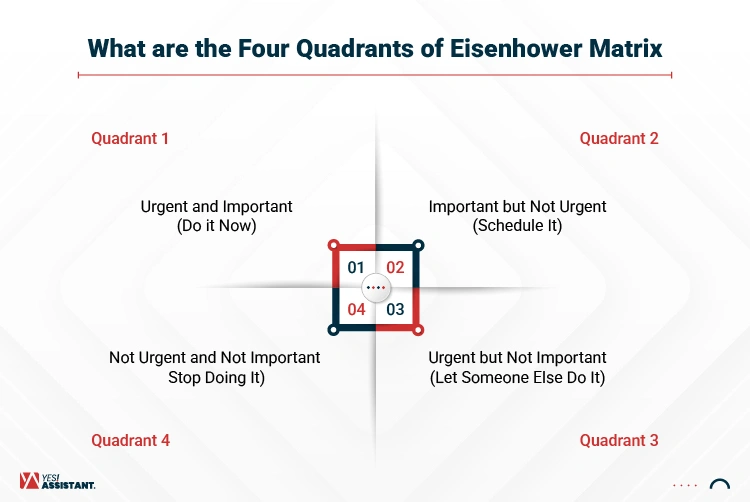
Here is how the four “buckets” work:
- Quadrant 1 – Urgent and Important (Do it Now): These are fires you have to put out. If a pipe bursts in your house, you don’t schedule it for next week and fix it now. Thus, these tasks are crucial and have a deadline hitting you in the face.
- Quadrant 2 – Important but Not Urgent (Schedule It): This is the most important box for your future. These tasks help you to reach big goals but don’ t have an immediate alarm to start. Thereupon, you should pick a time to executive this following step-by-step strategic plan.
- Quadrant 3 – Urgent but Not Important (Let Someone Else Do It): It focuses on urgent needs but doesn’t follow your goals. Means you need to respond to someone else’s last-minutes messages or a notification on your phone.
- Quadrant 4 – Not Urgent and Not Important (Stop Doing It): According to the quadrant, these are time-wasters that don’t help you to grow. It’s better to delete them from your day.
Why Quadrant 2 Drives Long-Term Success
If you want to succeed, you need to spend as much time as possible in Quadrant 2. Most people are busy spending out fires in Quadrant 1, the most successful people focus on this quiet corner of the matrix.
Here is why Quadrant 2 is the secret to long-term success:
- It Prevents Future Problems: By doing important work early, you need to stop emergencies happening later. It is like fixing a small leak in a roof today. So, your house won’t flood next month.
- It Saves You Time: When you plan ahead, you have less urgent work to do later. Because you aren’t rushing to finish things at the last minute, you stay in control of your schedule.
- It Is Where You Grow: Actual growth happens when you have time to learn and practice. You don’t build big skills during a stressful deadline; you build them when you have the focus to do your best work.
- It Lowers Your Stress: Working on important things before they become free from urgent needs. This is like you are constantly “chasing the clock,” you feel steady, clear-headed and ready for anything.
Conclusion
The difference between urgent and important is the difference between surviving and prospering. Urgent work serves your purpose for today, but important work builds a structure as big as you want to go tomorrow. If you spend all your time reacting to loud alarms and ASAP emails, you are suffering from task overload that leads to mental burnout.
Use the Eisenhower matrix and curving out your time with Quadrant 2, help you to take control of your life. Besides, this smart work helps you to stop being a servant to your inbox. Be smart, architect your future, pick “important” things today that align with your objectives.