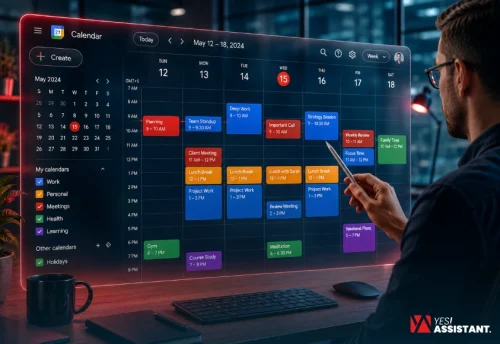


Why Calendars Control Business Success: Are You Using Yours Right?
Running a business means you need to maintain and collaborate with teams, build warm connections, handle communication channels and keep consistency. A calendar’s central visibility helps your team to coordinate tasks and prevent scheduling conflicts. Besides, a calendar supports you setting advance product development deadlines, and monthly marketing plans impact on your business success.
In this blog, you’ll learn how calendars influence your business productivity, prevent deadline failures, and strategic business planning. Also, learn how calendar sets strategic business planning involves product development timeline, set monthly campaigns, financial deadlines. In advance, business setting calendars maintain your operational consistency with bosses meeting, reportings, and track sales & marketing performance analysis.
What Does It Mean for Calendars to Control Business Success?
When a calendar really controls your success, it means it acts as the operating system for your entire company. Usually, you see the calendar creates a list of dates, set appointment reminders, or book meetings. But significantly, it’s a tool that decides where your money, energy and resources should go at every single moment.
Moreover, your calendar acts as your strong reminder. If a task isn’t on the schedule, it usually doesn’t connect to your operation line.
Control your success through a calendar means:
- You Own Your Time: Instead of fixing problems, you choose the calendar exactly when to focus on growing your business.
- You Protect Your Budget: Time is your most expensive resource. A structured calendar helps you to stop wasting your paid hours on low-value meetings.
- You Create Accountability: When you set a task on the calendar, it shows exactly who appoints as in charge of the project, team members and when to start. Therefore, your team members start work with clear information.
- You See the Big Picture: A managed calendar shows if you are actually working on your goals or just staying in business with small works.
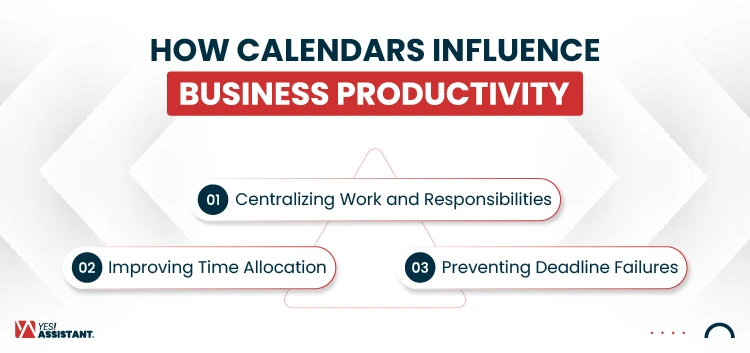
How Calendars Influence Business Productivity
A well-organized calendar is like a map for your workday. It shows you a clear strategy on where to go; thus, you’ll not engage with small and lower valued tasks. When your team uses a calendar correctly, everyone works faster and makes fewer mistakes.
It turns your messy tasks into a smooth plan where everyone aligns with goals, and knows what to do every day.
Centralizing Work and Responsibilities
When you keep everything in one shared spot, your team works with clear directions. You can see every meeting, tasks, and due time in one view. This stops people from booking two things at the same time.
It also helps business leaders to decide quickly because they can see exactly who is busy and who is free.
- One Clear View: Everyone knows the same plan, which stops creating confusions between team members.
- No More Overlap: You won’t accidentally schedule two meetings at once.
- Fast Decisions: Leaders can look at the calendar and decide on new projects instantly.
Clear Ownership: It shows exactly who is in-charge of each project. This reminds leaders to reach a responsible person at once.
Improving Time Allocation
Success happens when you spend your time on the most important work. A calendar forces you to pick what matters most before starting the day. This is a great way to fix the hidden workload most entrepreneurs ignore by making sure the big goals get done first.
- Less Time Wasted: You stop spending hours on minor work that doesn’t help the business grow.
- Time Blocking: You can set aside specific hours for big projects or planning.
- Daily Focus: You wake up to know exactly what your main goals are for the day.
- Better Balance: It helps you see if you are spending too much time on the wrong things.
Preventing Deadline Failures
If you miss a deadline, it will affect your reputation and lose you money. A calendar is your 24 hours alarm system for your project. Significantly, you can get clear insights on due dates, tasks in progress and update your team members to make sure everything is on track.
- Step-by-Step Tracking: You can see insights like updates or remaining parts of the project.
- Early Warnings: If a team member is behind, the calendar shows clear understandings that can help to fill the gaps.
- Review Points: You can schedule times to check the quality of the work before it goes to a client.
- Saved Revenue: Calendar helps to get notification, update every moment and keep your promises means happy clients who are paying you.
A business leader acts as a strategy planner and can overview a calendar using a high view option. You might feel bored on small updates or add information as lots of requirements come from multiple departments. Therefore, business owners assign remote virtual assistant to handle the chores and ensure you have free time to engage with strategic works.
Calendars and Strategic Business Planning
A calendar supports you more than a clock; it is a map for your future. It helps you see where your business is going month before you get there. By using a calendar for big-picture planning, you don’t need to decide based on ideas and start growing with an actual strategy.
Aligning Teams With Company Goals
When everyone follows the same timeline, the whole company moves in one direction. A calendar shows how different teams work together to reach a big goal. This prevents the cost of poor task organization by making sure no department is left behind or waiting on others.
- Coordinated Launches: You can see exactly when a new product is ready. Therefore, the marketing team can start selling it at the right moment.
- Scheduled Campaigns: It maps out every step of a sales event. This helps your team to know exactly what to post and when it should start.
- Money Milestones: Financial deadlines are set in stone. Consequently, you never miss a tax or budget review.
- Smart Hiring: Plan exactly when you need to hire new staff and schedule their training. Thereupon, new hiring staff will be ready to help you the right way.
Enabling Long-Term Forecasting
Smart leaders use calendar data to look ahead. By seeing how busy your team was in the past, you can predict what needs to be done in the future. It turns a calendar into a tool for making big decisions about money and people.
- Workload Prediction: You can see if you have too much to do next month. This lets you hire an assistant before anyone feels stressed or tired.
- Budget Planning: Structured your timelines show you when you will be spending most money on projects.
- Performance Reviews: Scheduling regular tasks with your team helps everyone stay on track and get better outcomes at the jobs.
- Quarterly Goals: You can break the year into four parts and check the calendar to see if you are actually meeting your targets.
Calendars as Operational Infrastructure
Calendar doesn’t ensure your revenue directly, but it’s a strong operational foundation of your business. It can play a vital role as your infrastructure, the daily work falls apart. When you build your operations around a schedule, your business runs like a well-maintained machine running everything without interruption.
Supporting Communication and Collaboration
Providing access to your team members can make your operations. It’s a brilliant step to set permission to relevant users as if everyone looks at the schedule instead of sending multiple messages. This is very helpful for teams who work from different homes or offices.
It also ensures all your team members arrive at the meeting with the right information at the right time.
- No More Manual Query: The system always helps you to check who is available for work at your hand. This saves hours of chatting with individuals to get their working updates.
- Team Synchronization: Your in-house staff and remote workers are connected with the same channel to ensure everyone is in the same loop.
- Prepared Meetings: Another benefit of calendar collaboration is putting the goal on the calendar. Thereupon, everyone can be aware of what to talk about before they start.
- Fixed Follow-ups: It stops how missed follow-ups hurt revenue by ensuring every client looping is scheduled and remembered.
Maintaining Operational Consistency
An operational software consistency is included with scheduling efficiencies, reliability that are aligned with goals. Recurring events on a calendar make sure you never forget the mandatory tasks that keep your business safe. When you schedule these lists with a calendar, this becomes part of your company’s discipline.
- Regular Management Meetings: Weekly meetings help bosses to stay on the same page and solve problems quickly.
- Revenue Analysis: Review monthly revenue to make sure your expenses are on track and your profits are growing.
- Happy Customers: Schedule and show regular reports to your clients to demonstrate your professionalism and reliability.
- Marketing Operation Checks: Check your marketing team’s update on presentation. Thus, you can fix which strategy works and which isn’t working right away.
Conclusion
Effective calendar management is the art of managing your operation consistently and efficiently. Set your calendar loaded with prioritized tasks, book appointments, project’s update meeting or upcoming event schedule that control your business. Implement time blocks and themed days further optimize your workflows and control of waste revenue spending at unnecessary places.
An integrated calendar provides a centralized view of tasks that reduce your valuable hours, block your strategic works, and update daily. Besides, calendars ensure your project milestones and never miss deadlines that damage your reputation and revenue. Maintaining your operational consistency through weekly team meetings, project updates and integration to your customer to build your business success.
FAQs
How Do Calendars Improve Time Management in Business?
Well, a calendar facilitating strategic planning, allows time blocking, and sends reminders on before time comes. This ensures your team members align with the same direction, and miss no opportunities. Therefore, your business will process work, meet client deadlines that help you to improve time management in your business.
Why Do Successful Companies Use Strict Scheduling?
Companies maintain strict scheduling in order to maximize operational efficiency and increase productivity. Also, this will boost employee retention by providing stability and structured schedule optimization to ensure right resource allocation, meet deadlines and reduce waste of hours. Thus, strict scheduling is required for a successful company.
What Happens When Businesses Do Not Use Structured Calendars?
If there is no structured calendar in a business, it will cause disorganized meeting schedules, missed deadlines, and employee burnout. Thus, the calendar will show double-meeting, double appointments, multiple reminders or missing client follow-up resulting in lost business opportunity and decreased revenue.