


How BPO Companies Use Predictive Analytics
Key Takeaways
- Predictive analytics is a process to recognize patterns and forecast future outcomes using historical data, statistical models and machine learning algorithms.
- BPO and businesses can use four major types of data analytics which include descriptive, diagnostic, predictive and prescriptive analytics.
- Some of the major techniques of predictive analytics include regression analysis, time series analysis, classification, clustering and machine learning.
- BPO companies can get several benefits from predictive analytics, such as better resource planning, improved customer retention and reduced SLA and performance risk.
- There are also several challenges of using predictive analytics in BPO, which include model drift, data quality and availability, changing processes, etc.
- Common steps to implement predictive analytics in a BPO include identifying the right use case, setting data requirements, selecting predictive analytics tools, and developing and deploying predictive models.
BPO companies often need to predict future events to provide more flexibility and scalability while handling client processes. These may include changing workloads due to seasonal demand, customer behavior or risk of losing employees. Many outsourcing service providers use a technique called predictive analytics to forecast future outcomes that can impact their business. In this blog, we are going to discuss what predictive analytics is and how BPO service providers can use it to adjust their business strategy for the future.
What Is Predictive Analytics in BPO?
Predictive analytics is a type of data analytics that uses historical data, statistical models, and machine learning algorithms to recognize trends and future outcomes. In BPO, predictive analytics is used to forecast workload demand during peak season and adjust staffing size. It can also be used to assess the risk of client churn and reduce operational risks.
Business Process Outsourcing can use four different types of analytics for decision-making, including predictive analytics:
| Analytics type | Main question | BPO example |
| Descriptive analytics | What happened? | Call volume increased 15% last month. |
| Diagnostic analytics | Why did it happen? | Volume increased because of a billing issue. |
| Predictive analytics | What is likely to happen? | Billing-related contacts may increase next week. |
| Prescriptive analytics | What should we do? | Add agents to the billing queue before the increase. |
How Predictive Analytics Works
Some of the major steps to implement predictive analytics in a BPO company include the following:
- Collecting historical and real-time data from available sources such as CRM software, databases and client documents.
- Data preparation and cleaning, which usually include activities such as handling duplicate records, missing values and data formatting.
- Selecting models based on the data type and problem being analyzed.
- Training the models to perform data analysis using historical data so they can recognize patterns and identify relationships in a dataset.
- Deploying the trained models to analyze new data to recognize patterns for a specific case and forecast outcomes.
- Model monitoring to find out the necessary fixes to produce an accurate and reliable outcome.
- Sharing the predictions with BPO account managers and clients so they can take actions based on these predictions.
Predictive Analytics Techniques for BPO
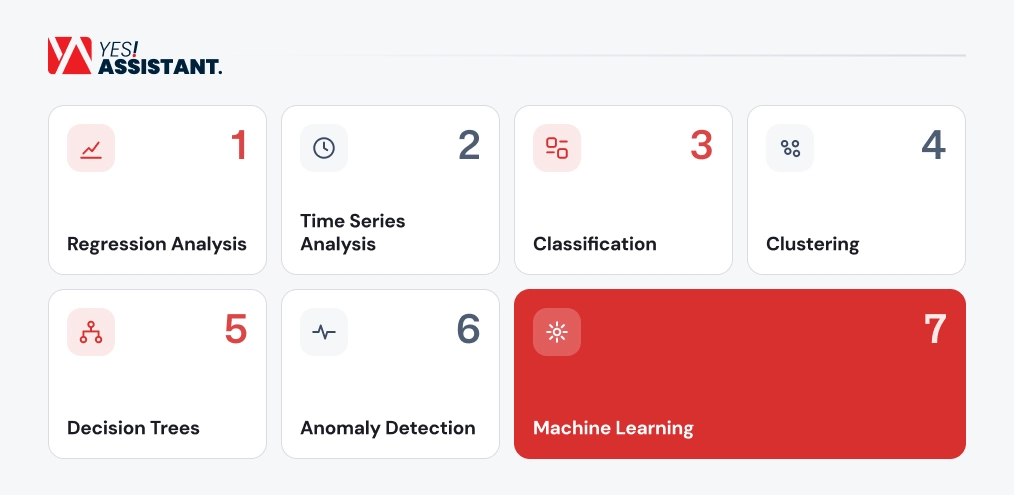
BPO can use different types of predictive analytics techniques to identify patterns in the processes and workload they handle for their clients.
| Predictive Analytics Technique | How It Is Used in BPO | Example |
| Regression Analysis | Predicts numerical outcomes based on historical data and relevant variables. | Forecasting call volume, handling time or operational costs. |
| Time Series Analysis | Analyzes data over time to identify trends, seasonality and recurring patterns. | Predicting weekly or seasonal contact volumes and staffing needs. |
| Classification | Assigns cases, customers or interactions to predefined categories based on patterns in historical data. | Identifying customer interactions at higher risk of escalation or churn. |
| Clustering | Groups similar customers, transactions or interactions based on shared characteristics. | Segmenting customers based on behavior, service needs or interaction patterns. |
| Decision Trees | Uses a series of rules based on input data to predict an outcome or category. | Identifying cases likely to require escalation or additional quality review. |
| Anomaly Detection | Identifies unusual patterns or results that differ significantly from normal activity. | Detecting unusual error rates, transaction patterns or sudden changes in performance. |
| Machine Learning | Learns patterns from historical data to make predictions and improve as new data becomes available. | Predicting SLA risks, workload changes or customer behavior. |
Benefits of Predictive Analytics for BPO Operations
Some of the major benefits of using predictive analytics for BPO operations include the following:
Better Resource Planning
Task overload can lead to employee burnout in a business. Predictive analytics can help outsourcing service providers plan staffing levels for the clients during peak seasons. It can help them distribute workload more efficiently while handling different processes for their clients.
Improved Customer Retention
BPO companies can use data to predict the behavior of both existing and potential customers. They can identify the customers who are not satisfied and take necessary actions to improve relationships with them.
Increase Operational Efficiency
Outsourcing BPO service providers can identify where operational bottlenecks or service disruptions can occur. Sometimes, they can identify whether a process failure can occur or a skilled professional leaves the team. They can take advance steps to handle those situations to maintain their operational efficiency.
Reduced Operational Risks
BPO companies can detect unusual agent behavior and customer churn risks with predictive analytics. It can also help them identify fraud, data security and compliance risks caused by process gaps and non-compliance.
Common Use Cases of Predictive Analytics
Predictive analytics can be used in a BPO company for several purposes, but here are some common use cases:
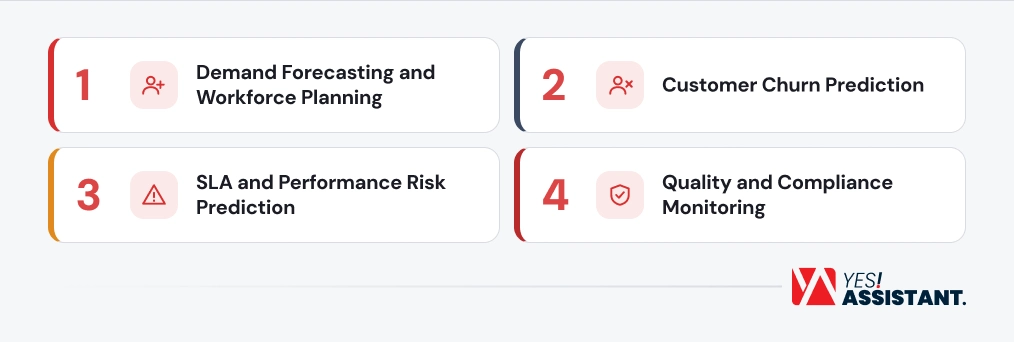
Demand Forecasting and Workforce Planning
BPO companies use predictive analytics to estimate the service demand of their clients. They can plan their resources and staff according to that demand. Outsourcing providers can understand how to scale their staffing levels based on changes in demand or workload.
Customer Churn Prediction
Frequent customer churn can be a significant problem for any type of business. This is why many BPO companies study customer interactions with agents to predict if there is a risk of losing the. Outsourcing providers use that prediction to identify which accounts need more attention and improve their service to reduce churn.
SLA and Performance Risk Prediction
Predictive analytics can assess the risk of missing SLA targets or KPIs. BPO service providers can assign tasks and help the agents address their performance issues based on it.
Quality and Compliance Monitoring
BPO companies use historical data, quality scores, error rates and customer interactions to identify the risk of quality and compliance issues. Outsourcing providers take corrective action to reduce errors and prevent compliance issues.
How to Implement Predictive Analytics in BPO
Outsourcing service companies can implement predictive analytics by using the following steps:
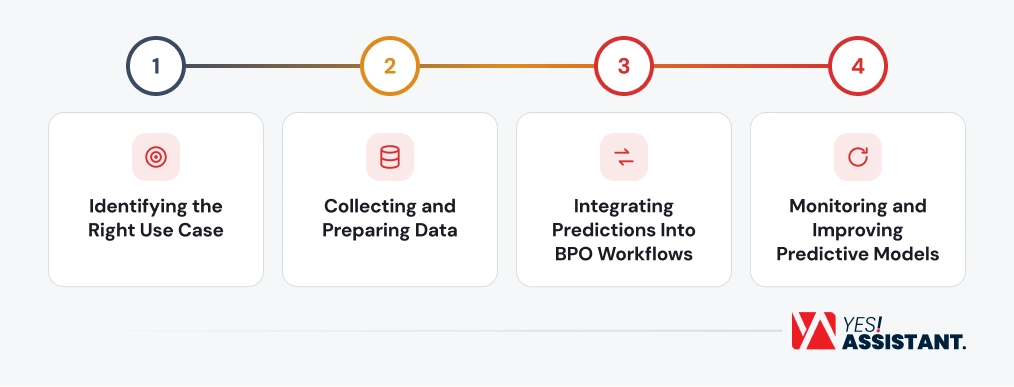
Identify the Right Use Case
Predictive analytics may give a BPO company useful insights, but it is not meant for every case. An outsourcing service provider needs to identify how predictive analytics can support their operations. Some of the most common use cases include workflow optimization, workforce planning, fraud detection and assessing workload before peak season.
Setting Data Requirements
Predictive analytics uses historical data to recognize patterns and provide insights on future outcomes. It is necessary to define data types, data sources and data management policies for collecting that data. This is important for ensuring data accuracy and data security.
Select the Right Tools
Some of the common tools BPOs can use for predictive analytics are Amazon Forecast, Alteryx, and Adobe Analytics. An outsourcing service provider can use these tools for data analysis and predicting future outcomes for a specific case. They should consider budget, integration complexity, and scalability when choosing the right predictive analytics tools.
Developing and Deploying Predictive Models
BPO companies should choose predictive models and train them using the appropriate algorithm and predictive analytics techniques after selecting the tools. They need to test a model to validate its accuracy and reliability. The test can suggest some necessary fixes to improve model performance. Outsourcing service providers should deploy the predictive models after applying those fixes.
Monitoring and Improving Predictive Models
After deploying the predictive models, their performance needs to be monitored continuously. Outsourcing providers can collect feedback about the deployed models from the stakeholders. The feedback and performance monitoring are useful for identifying areas for improvement in the predictive models.
Challenges of Using Predictive Analytics in BPO
Some of the major challenges of implementing predictive analytics for BPO companies include the following:
Data Quality and Availability
A BPO needs sufficient and high-quality data for analysis. Outsourcing providers may have duplicate entries or incomplete information stored in their system. It can be difficult to identify reliable patterns in a process with a limited amount of historical data for new clients.
Managing Experts
Predictive analytics and data analysis require specialized expertise. Someone who performs these techniques usually needs to know statistical modeling, programming languages and how to use analytics software. It can be expensive and difficult to hire such experts sometimes.
Changing Processes or Business Patterns
Some clients can frequently change their workflow and business patterns. These changes can make it difficult for the analysts to use predictive analytics. It is because they need to collect reliable and consistent historical data to build and maintain predictive models.
Data Privacy and Security
It might be necessary to gather a huge amount of historical data from multiple systems for predictive analytics sometimes. A BPO may face challenges accessing or using some records because of data privacy and security standards. Sometimes, a BPO may not be able to share a client’s confidential information with the analyst team due to privacy and compliance requirements.
Model Accuracy and Drift
The deployed models in predictive analytics require continuous monitoring. This is because when the client changes their process, a model’s prediction can become less accurate. So BPO companies need to regularly recalibrate their models to get reliable predictions.
Conclusion
Predictive analytics can help BPO service providers to improve their workforce planning and reduce operational risks. It is a technique that uses historical and real-time data to recognize pattern in a process or customer behavior to forecast future outcomes. BPO companies use predictive analytics for demand forcasting, customer churn prediction and identify the performance issues in their agents. However, outsourcing service providers needs high-quality data and specialized expertise to use this technique.
Frequently Asked Questions
How do BPO companies use predictive analytics?
BPO companies use predictive analytics to recognize patterns and forecast future outcomes. They use it to understand the increase of workload in peak season or which customers are at risk of churn.
How does predictive analytics help with demand forecasting?
Predictive analytics uses historical data to identify patterns and forecast demand. For example, it can perform an analysis on the monthly workload of a client account to find when the demand remains higher than the average.
What data is needed for predictive analytics in BPO?
Predictive analytics needs historical and real-time data from different systems, such as databases, CRM systems and documents for analysis.
Can predictive analytics improve workforce management?
Yes, BPO companies can predict workload on a specific client with predictive analytics and they can scale their team or staff levels based on that. Predictive analytics is very useful for task assignment and workload distribution.
What are the challenges of using predictive analytics in BPO?
Some of the major challenges of using predictive analytics in BPO include data quality and availability, changing processes and finding experts for data analysis.