

How to Protect Mornings on Your Calendar and Get More Productive
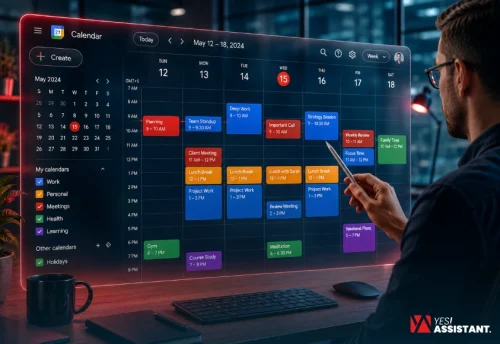
Protecting your mornings on the calendar is one of the most effective ways to improve focus, productivity, and work-life balance. The early hours of the day are often when energy, creativity, and decision-making abilities are at their peak.
However, without clear boundaries, meetings, interruptions, and last-minute requests can quickly consume this valuable time. In this guide, we’ll explore practical strategies to protect your mornings and make the most of your most productive hours.
Why Deep Work Works Better in the Morning
To stay consistent in your daily work, it’s an effective way to set your brain’s highest capacities in the morning. Such as you require for deep focus on complicated tasks, which naturally replaces sleep and is free from external distractions.
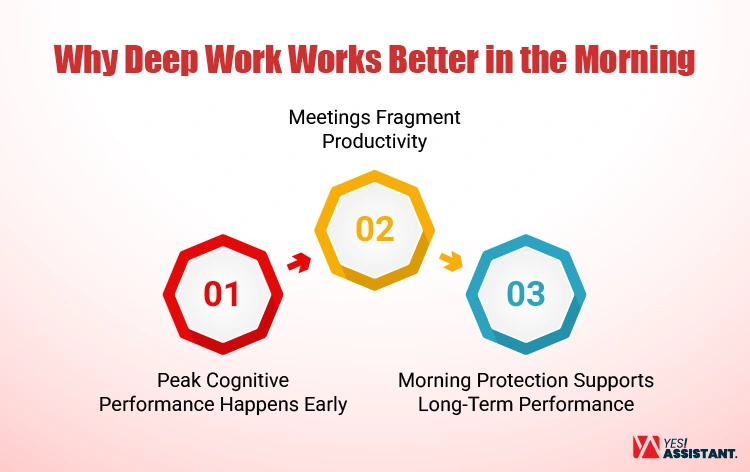
Peak Cognitive Performance Happens Early
At the beginning of the work, your brain naturally smooths the default mode network, the system that is responsible for mind-wandering.
- Strict to Self-control: Self-management and decision-making resources are fully restored, permitting you to track complex problems without mental fatigue.
- Psychological Advantages: Use your brain chemicals like dopamine and stress hormones, which are vital to keep your attention and alertness at high levels. When these chemicals go up, they create the perfect space in your brain’s front area that helps you to focus on one thing for a long time.
Meetings Fragment Productivity
When your brain shifts between tasks, also known as context switching, it severely limits your capacity to perform analytical and high-value work.
- Attention Residue: When you switch from a primary project to an unsettled meeting or email, a part of your brain remains focused on previous tasks. This residue can take up to 23 minutes to get back into your main focus.
- Disrupted Flow States: Meeting breaks up your day and switches into disjointed fragments, making it nearly impossible to reach a sustainable state of flow. This sequence of states could invest at your best levels.
Morning Protection Supports Long-Term Performance
Starting your day with a deep work session gives you big wins. Therefore, you can establish a sustainable competitive advantage in skill building and high-value outcomes.
- Prevent Burnout: Though front-loading your critical thinking before the beginning of the day creates a chaotic situation. You’d better avoid the mental fatigue and overwhelmedness that often lead to burnout.
- Consistent Progress: Think of the daily task requirement and urgent work. Protecting your morning creates a consistent rhythm, and you can gain your most important goals first.
Too many tasks in your morning session create a chaotic situation and mental fatigue. To protect this focus time, many business owners delegate their daily operations tasks to a virtual assistant. This effectively gives you space to focus on high-level strategy settings during peak hours.
How to Block Mornings on Your Calendar
Block your morning on your calendar to protect your best hours. This guarantees you have quiet, uninterrupted time to focus on your most important tasks before daily meetings and start mental destruction. Follow these actionable steps to set up your morning focus routine that ends with a great day.
Create a Recurring Focus Block
Set a daily reminder; use the phone’s built-in apps like Google Assistant or Apple Siri. Besides, choose a standard calendar event. Both Google Calendar and Microsoft have built-in features to focus time tools that automatically decline meeting requests in the same time slot.
- Identify Your Most Important Work: Determine 1 to 3 key priorities that drive meaningful progress. Besides, schedule them during your first 2 to 4 hours of the morning when your cognitive energy is highest.
- Automate Your Availability Status: Set your daily repeating block to “Focus Time” or “Busy” in Microsoft Outlook or Google Calendar. Therefore, your colleagues instantly inform you that time slots are already booked.
- Build in Your Strategic Buffer Zones: Add a 15 to 30-minute flexible buffer time to block your deep work period. This helps you to catch unexpected interruptions without disrupting the rest of your daily schedule.
Use Clear Event Titles
Name your block with a clear action instead of a generic label like “Busy.” Use specific titles like “Deep Work – Project Drafts,” “Creative Work,” or “Morning Plan.” This tells you exactly what mental state is required and signals to others exactly what you are doing.
- Use Action-Oriented Naming: Never use unclear labels like “Engage with Work.” Name your calendar blocks with defined actions. This is like “Inbox Cleaning – Project Name” or “Creative Review.”
- Mental Preparation: Use specific titles that help you immediately to understand exactly what mental state is required before the block begins.
- Clear Team Signaling: Provide descriptive names that clearly signal to your colleagues and team members precisely what you are focused on doing during that time.
Set Default Scheduling Rules
Protect your morning time by blocking your calendar to avoid double-booking. Set your calendar availability to “Busy”; therefore, your colleagues will know you’re already occupied with other schedules. Besides, you can set your calendar to “Automatically decline meetings,” which automatically declines meetings to protect blocks.
- Create Repeated Events: Set a repetitive morning time block (like 9:00 AM to 11:00 AM) to establish dedicated slots for high-impact, uninterrupted work.
- Set Availability to Busy: Make sure your team member is aware of your time blocks during “Busy” hours. Automated scheduling tools can inform your colleagues’ schedules and avoid double-bookings.
- Auto-Decline Overlaps: Configure your calendar’s schedule rules. Wherever you mistakenly set similar slots, the system will automatically decline your bookings.
Color-Code Protected Time
Color coding helps you to focus on unique status like deep purple, bold red, or vibrant orange exclusively to block on morning focus. You can instantly track your specific tasks at a glance while maintaining the color code.
- Create the block: Track your time and follow your preferred morning hour (like 8:00 AM – 12:00 PM) and drag-and-drop to create an event block.
- Assign a color: Click the color circle or palette icon near the event title and choose your designated morning color.
- Set as repetitive: Set your morning events under a repetitive format to automatically shade your morning workflows.
Communication Strategies That Reinforce Boundaries
Setting a shared calendar that solves your part of the burnout. To protect your time, you also need to set clear rules for how people communicate with you. Therefore, use a clear, proactive communication strategy to ensure everyone respects your boundaries while business operation rules smoothly.
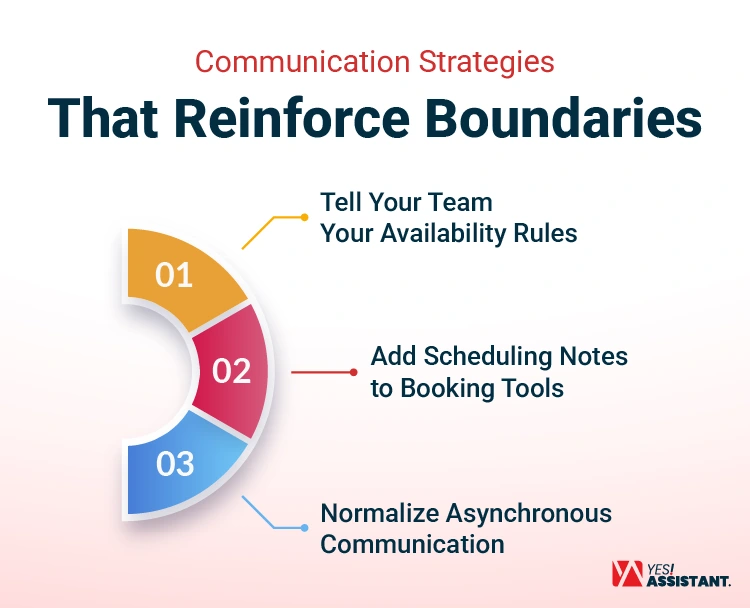
Tell Your Team Your Availability Rules
You must tell your colleagues about your boundaries before you expect them to follow your language. Sharing your specific crucial working hours directly prevents accidental scheduling mistakes and builds mutual workplace respect.
- Share your exact working hours with your team during weekly stand-up meetings to set your expectations.
- Update your internal communications status to show when you are taking lunch or stepping away.
- Send a quick message to your immediate department when you change your ongoing weekly routine.
- Discuss boundary rules openly with new hires; therefore, they can understand your team’s schedule habits early.
Add Scheduling Notes to Booking Tools
Automated booking links are convenient, but they can easily allow outsiders to overfill your daily schedule. Adding clear instructional notes right inside your booking pages guides clients on how to pick an appropriate time.
- Write a short message on your booking landing page explaining your preferred meeting windows.
- Limit the number of external booking slots available each afternoon to protect your deep work time.
- Require clients to provide a brief agenda before they can officially confirm a meeting slot.
- Set your booking tool to automatically block out federal holidays and company-wide training days.
Normalize Asynchronous Communication
Every business question doesn’t need a face-to-face video call or immediate chat response. Shifting to unsynchronized communication gives your team a delay in replies, creating more inconsistent time to focus and get the work done.
- Encourage your staff to use project boards instead of calling a meeting for basic status updates.
- Establish a complete company-wide rule and reply to standard internal email within 24 hours
- Create a video regarding the complete workout directions rather than scheduling with your clients for long screen-sharing sessions.
- Focus on highly prioritizing morning time blocks and keep them in the next queue for the tasks that have no immediate requirement.
Habits That Help Protect Your Mornings
How you spend your first few working hours sets the tone for your entire day’s success. Protect your morning from digital distractions and arrange early meetings that save your best energy for the most important creative work. Building strong morning habits, organizing your day with proper handling of inbox chaos, that harmonizes your workflow.
Start With Your Most Important Task
Start your biggest project when your mind is focused with the best energy. Finishing your critical work early removes daily stress and builds immediate momentum.
- Identify your top priority before the working day finishes.
- Block your first two hours for execution.
- Ignore minor tasks until your high-impact tasks are done
- Finish the complicated project while your mind is fresh.
Avoid Checking Emails Too Early
Check inbox at first hours means you react to other tasks rather than prioritizing in your morning. This controls your mind on others’ urgent problems and disconnects you from your planned schedule before you even begin your own work.
- Turn off your email application until noon.
- Strictly pause your early morning push notifications.
- Focus on prioritizing tasks before reading incoming messages.
- Set specific check times later in the day.
Keep Meetings for the Afternoon
Teamwork session syncs are essential, but they can easily distract you from morning concentration. Better to push your group conversations to the afternoon, keeping your early hours completely clear for deep work.
- Decline morning invites to protect focus time.
- Set your appointment booking availability for afternoons.
- Group all your team calls together.
- Use early hours for quiet, single execution.
Create a Consistent Morning Routine
When your brain starts working according to your predetermined plan, you can focus on maximum sessions. Reducing your morning assumptions preserves your decision-making energy for your big business projects.
- Start your workday at the same time.
- Clear your physical desk space every morning.
- Review your daily goals before opening tools.
- Spend ten minutes planning your task list.
Set Clear Work Boundaries With Your Team
To protect your morning focus time, you must set clear and firm rules with your colleagues. Communicating your schedule openly ensures your team members can collaborate without interrupting each other.
- Mark mornings as busy on shared calendars.
- Tell your team when you are unavailable.
- Mute internal chat apps until your lunch break.
- Encourage your department to respect quiet hours.
Conclusion
A morning routine is a dedicated set of habits you perform right after waking up to establish energy, focus, and productivity for the day. A successful routine does not always look standard. You should customize your workstyle rather than feeling like an exhausting, rigid small task. Be strict and result-driven; your business needs proactive creation over reactive consumption.
Protect your first 60 to 90 minutes of your day from screens, emails, and news. Besides, you should also strictly focus on personal discipline, strategic planning, and your most vital business goals.
FAQs
How many hours should I protect each morning?
You should protect your morning hours depending on your goals. Dedicate 1 to 3 hours to deep work and 15-30 minutes before you step outdoors.
Should I decline morning meetings completely?
It’s not a standard requirement to decline the morning meeting. When you see your morning meeting is not important with core essentials, just politely recognize your deep work time (9:00 AM to 11:00 AM). If the meeting time is really core to your business, customize your morning schedule for the day.
Can calendar blocking improve productivity?
Yes, calendar blocking (or time blocking) is a highly effective way to improve productivity. Scheduled time slots for specific tasks it limits multitasking, prevent procrastination, and reduce mental fatigue.