
What Does a Virtual Administrative Assistant Do? Roles, Tasks & Benefits Explained
A virtual administrative assistant helps the owners to handle the tedious work that consumes most of their time.
Every business owner knows the feeling: you start the morning with a clear plan to focus on growth. But by noon, you’re buried in emails, rescheduling meetings, and putting out operational fires. This lets the owner not do the work that was supposed to grow the business forward, and get under the other work.
That’s where a virtual administrative assistant steps in. They handle the operational and administrative tasks that consume your time. So that you can direct your energy towards work that actually needs an owner’s expertise and time. Moreover, these virtual assistants work remotely with no desk and no benefit package.
This guide covers everything you need to know about what a virtual administrative assistant does, what skills they bring, how they differ from traditional assistants, and whether hiring one makes sense for your situation.
What is a Virtual Administrative Assistant?
A virtual administrative assistant is a professional who provides administrative support to your business or an entrepreneur remotely. They usually do that through Digital tools and online communication support, probably without ever setting foot in the office.
To think of it in a way is VAA does the same core work as an in-house administrative assistant. They manage calendars, handle inbox chaos, and even organize records. But all these operations are usually handled entirely through platforms like Google Workspace, Microsoft 365, Zoom, and Slack. Often for project management tools like Jira, Trello, Asana, or ClickUp. These assistants usually work independently as freelancers or through virtual assistant agencies.
Now, why are people attracted to this model? That’s because of the model’s flexibility. Businesses now can hire VAA hourly, contractually, and also full time capacity. Moreover, the company needs to pay only for what is needed. Furthermore, VAA doesn’t need any desk setup in the office or equipment to purchase. For small businesses and teams, flexibility is not just convenience; it’s a complete advantage, and so many companies now plan to hire virtual administrative assistants.
Main Responsibilities of a Virtual Administrative Assistant
The workload of a virtual assistant administrator differs from client to client and even varies depending on the type of industry and specific needs. However, most VAAs are hired to handle a similar set of core work. Here’s what that actually looks like in practice.
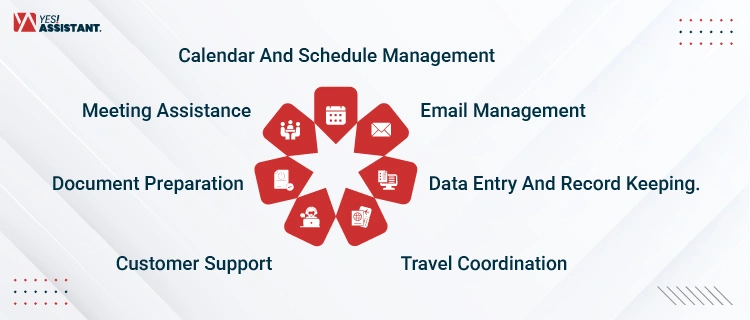
Calendar and Schedule Management
Your Virtual Administrative Assistant schedules meetings, calls, calendar invites, and organizes your day. They work in a way that makes sense that your date is productive, not just a day full of appointments.
A skilled VAA is more than just a basic; it’s a time manager. They keep their work blocks focused, create buffer time between meetings, handle conflict, and communicate. They have calendar applications that they use, such as Google Calendar, Calendly, or Microsoft Outlook, so they can see and keep everything in sync and on track. This results in a calendar that is on your side, rather than against you. And so, there will be significantly fewer double-bookings, missed calls, and back-and-forth scheduling emails.
Email Management
An unmanaged inbox is one of the most obvious ways of wasting hours. A virtual assistant for email management can manage and assist you in organizing it. He can manage incoming e-mail, prioritize it, draft answers to common questions, flags items for you to review personally. Moreover, he can save or delete correspondence out of the way. As time goes on, they come to understand your communication style, and they know what is most important to you. At that time, they can take over more of your communication over time, only requesting what is most important to you.
You can also find them obtaining subscriptions, eliminating spam, creating folder architecture, and frequently developing email designs to accelerate regular email correspondence. The result is a manageable, organized inbox that doesn’t cause stress or anxiety each day!
Data Entry and Record Keeping
A well-organised and accurate set of data is vital for the operation of any business. The ongoing task of refreshed and usable data is handled by virtual administrative assistants. This includes financial spreadsheets, customer interactions, contact details, keeping shared databases organized and consistent, and ensuring the CRM systems, such as HubSpot or Salesforce, are updated.
Virtual assistant for data entry might not feel like a glamorous job, but its benefits are huge. Clean records lead to quicker reporting, accurate invoicing, and hassle-free audits, in general. By caring and ensuring accuracy in data entry, a VAA is helping to prevent costly errors and mistakes.
Travel Coordination
There’s a surprising amount of moving parts to business travel, flight, hotel, on-ground transportation, itinerary, expense tracking, and unforeseen changes. All that is done by a virtual administrative assistant. They find the best travel deal within your budget, arrange your booking, arrange transfers, and structure day-to-day itineraries. They also book changes and cancellations if plans change.
One of the most time-consuming administrative tasks for executives and business owners is traveling frequently. Not handing it over completely to a VAA isn’t only time-saving, it takes a large amount of logistical stress from your load.
Customer Support
Numerous virtual administrative assistants are the initial line of defense for a business’s customers and clients. They answer all questions through email or chat, deal with simple questions, complete basic requests, follow up on pending issues, and escalate more complicated issues to the relevant individual in the team. If done correctly, this gives a professional and responsive customer service without having to keep the business owner on call 24 hours a day.
A VAA that takes care of customer service also allows your main team to concentrate on work that requires highly specialized knowledge. Instead of everyone answering the same question, call center virtual assistants can handle the calling support.
Document Preparation
Whether it’s drafting internal reports, generating client proposals, setting up meeting agendas, or formatting company documents, virtual administrative assistants excel at crafting professional and polished presentations. They write documents, check documents for clarity and accuracy, edit documents into various formats, create presentation slides, and organize research into coherent and readable documents.
Many of the VAAs are highly experienced with the entire Microsoft Office Suite, as well as Google Workspace. They know how to format documents to professional standards, including correct headings, uniform fonts, clean layouts, etc, making the materials that reflect your business look the part.
Meeting Assistance
A virtual administrative assistant can help you with all aspects of the meeting process, from the beginning to the end. They organise the attendance of participants before a meeting, send out invitations, draft a meeting schedule, and provide preparatory materials to participants. Some VAA records minutes or notes during the meeting.
This type of meeting accountability helps the team to stay focused and on track. Then they follow up on the meeting so that the tasks can be completed in due time.
Skills Required for a Virtual Administrative Assistant
Doing administrative work remotely demands a set of professional abilities, personal discipline, and technical expertise. These are the capabilities that make an effective VAA great, and one who struggles is a very different one.
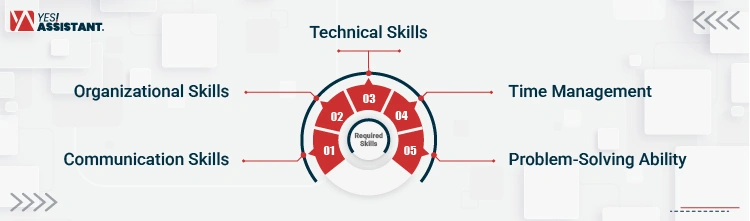
Communication Skills
Working remotely from home means most communication needs to be done by writing. So, a VAA needs to write professionally and with the proper tone for different situations. It might be to communicate with team members or just clients. Moreover, your writing and voice should sound confident, as you might need to do video conferences and meetings often. Clear communication helps you avoid all kinds of unnecessary troubles and errors at work.
Organizational Skills
A VAA usually has to deal with several tasks, deadlines, and perhaps several clients simultaneously. Maintaining all these things in order demands true organizational skill, which is not simply having a neat desk, but having systems, priorities, and discipline to keep them neat even when it gets busy. A VAA will only be successful if they have strong organizational skills to detect issues before they occur, instead of after the fact.
Technical Skills
The contemporary virtual administrative assistant ought to be at ease with a variety of digital tools. These can be communication platforms, calendar and scheduling applications, cloud storage and document sharing, spreadsheet applications, word processing software, video conferencing applications, and even CRM software or project management. Equally as vital is the capacity to quickly take on new instruments, because business software is constantly improving, and other clients can incorporate distinctive toolkits.
Time Management
Just like a real-world office situation, VAA is also expected to be efficient and disciplined in managing time. Especially when they are working without any supervisor watching over them. There may be multiple deadlines for multiple projects you need to work on, all of that at once. That’s why a VAA needs to know when to ask and not to assume, and also establish a healthy habit.
Poor time management is especially apparent when it comes to remote working: Late delivery and slow return response come with a loud noise.
Problem-Solving Ability
Administrative work is not always exactly as it appears it will be. Schedules shift, even systems fail, and unforeseen requests come in all the time. A good VAA will deal with these on their own and look for practical solutions without overly escalating small problems. This is a problem-solving capacity, the capacity to think clearly under mild pressure and make sound judgment calls, which makes a VAA a genuine partner, instead of an executor of tasks.
Virtual Administrative Assistant vs Traditional Administrative Assistant
The purpose of both positions is the same: to offer organized and reliable administrative help. The difference lies only in the delivery of that support, and where it is provided.
A traditional administrative assistant is on location. They’re physically there, which means they can do things that involve being physically present, such as receiving packages, handling physical files, greeting visitors, running errands, or immediately responding to requests in person. They usually have salaries, benefits, equipment, and their own office space, which are all significant ongoing expenses.
A virtual administrative assistant is a remote office assistant who performs all of her duties virtually. They cannot perform tasks that require in-person involvement, but they can do virtually anything else, and this often does not cost as much as doing it in person. VAAs can often work with several clients, thus also have a wide variety of experience in various industries and tools. There is no extra overhead cost for businesses, and only the hours worked are charged.
If your business has a remote or hybrid workforce, a virtual office assistant might make more sense and be more affordable. If you have a business that truly requires a person on the premises, an old-school assistant is most likely the better choice. Many organizations opt for a compromise; they have one person in the office to take care of physical needs, and the other VAA for all the other needs that can be dealt with online.
Who Should Hire a Virtual Administrative Assistant?
Virtual administrative assistants can be helpful in a variety of situations beyond what people realize.
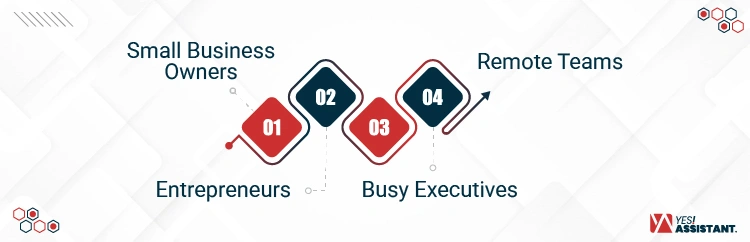
Small Business Owners
Typically, small business owners work with three to four employees. They can manage strategy, client relations, operations, and administration, which means something gets left behind. The virtual administrative assistant for small business owners understands administrative duties, not requiring the owner to carry out administrative tasks at the cost of a full-time employee.
Entrepreneurs
As a small business owner, time is important. Managing e-mail and scheduling meetings takes time away from building the product, talking to customers, or raising funds. A VAA lifts the administrative burden and allows entrepreneurs to get on with what matters most: building the business.
Remote Teams
Teams that are spread out do not have the same central administration that teams in the office enjoy. The virtual administrative assistant can help the entire team, whether it’s coordinating across time zones, managing shared documentation, internal communications, or keeping workflows organized. This provides remote teams with the backbone to operate as a unified team.
Busy Executives
High-level executives need to make decisions, build relationships, and lead the team rather than manage calendars and go through emails. A VAA takes over the job by taking care of the logistics section so that executives can focus on the jobs that they need to be more focused on.
Wrapping Up
All the critical but time-consuming tasks that keep a business running are delegated to a virtual administrative assistant from a remote location, and at a cost that is appropriate for businesses of any size: Calendar Management, e-mail, data entry, travel, customer service, documents, and meeting coordination.
The actual benefit is not the time saved. It’s the use of those hours. When someone else is dependable in the administrative duties, business owners, executives, and entrepreneurs are able to be consistently present for the work they can do. A virtual administrative assistant can be one of the most beneficial investments for those who don’t have an abundance of time and have a business that depends on the use of time.