

The Psychology Behind Overworking: Your Brain Is Addicted to It
What is Overworking? Overworking is the act of working beyond your physical and mental limits. It happens when job demands exceed your physical ability to recover, which is caused by working after regular hours
It is not just about working long hours; it is a state of constant labor that ignores the rest after long-time office hours. This habit drains your energy and eventually stops you from being productive.
Core Psychological Drivers of Overworking
When one becomes afraid of thinking about self-ability, skills, and effectiveness, then drives to more work than usual working hours. This overthinking driver leads to increased stress, anxiety and mental burnout, finally leading to distracted job satisfaction and career growth.
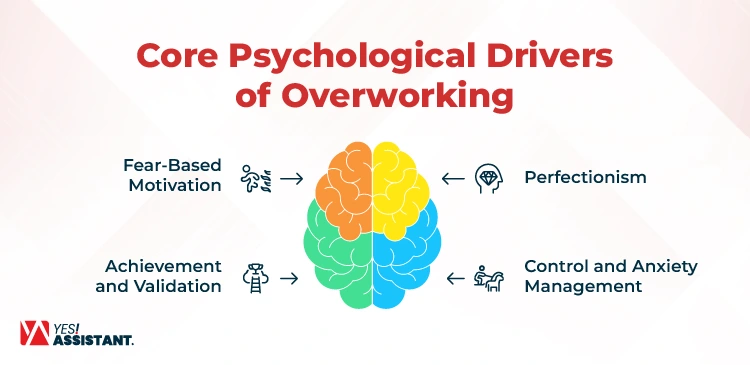
Fear-Based Motivation
Fear-based motivation is a powerful push to the people who don’t think or drive with self-motivation. Therefore, it needs to push for more perfectionism, leading to anxiety over performance evaluation, imposter syndrome due to feeling job insecurity.
What Factor grows on fear-based motivation
This is a common phenomenon in different industries to impel employees to ensure unending quality, high-perfectionism with no limits. Especially imposter syndrome apparent in healthcare, and tech industries. Which causes a high rate of cognitive pressures, anxiety and psychological vibration at every moment.
Key impacts of Imposter syndrome:
- Fear of “flaw” or “indequate” leads to work endlessly.
- Work excessively or continue work already completed.
- Denial of ability and skills to work within limited hours.
Perfectionism
In an organization, you’ll find some employees are highly engaged with continuous perfectionism. These people don’t maintain no-limits on standard, perfection, change styles and work consistently without delegation. This is fundamentally driving fear-evaluation, insecurity and misleading, but resulting in a mental disaster, which requires therapy to recover mental health.
What key factors grows perfectionism at workplace
Perfectionism has two factors like two parts of a sword. One part has a high motivation to engage with excessive tasks, another part is to engage with fear of firing from jobs, misevaluation.
Key Impacts of Perfectionism:
- Always think work is not perfect enough.
- Procrastinating due to fear of no limits of standard.
- Avoid take responsibility due to no guarantee of success
Achievement and Validation
When you drive to self-worth linked with productivity, this forces you to perform incessantly. Many of them find approval from others, the behavioral part including human interaction. Excessive validation can be the cause of the deeper metal fatigue, increase stresses, and daily burnout.
What factor ensures achievement and validation
If you’re not confident enough due to lack of self-control, feel lower dignity or fighting against ongoing issues, require others validation. This happens when the working environment is disgraceful to others’ work, back-biting, or excessive quality requirements.
Key Impact on Achievement and validation:
- Struggling to get accomplishment over excessive works
- Constantly feeling pressure to get value on completing work.
- Stressed relationships or impact workplace performance results being isolation or job dissatisfaction.
Control and Anxiety Management
Overworking sometimes turns to concern of security in-terms of quality issues. These people are habituated to work continuously without getting defined standard form of tasks. Therefore, engaging with relentless tasks drives individuals to avoid next tasks willingly for mental fatigue.
What factors control and anxiety management
Overwork often results you out of control when cognitive pressure exceeds emotional balance leads to personal anxiety. You may feel a spiral out of control that leads to high-level of stress, tension and mental burnout with no clear way.
Key impact on Control and Anxiety Management
- Overworking always keeps you busy to avoid slow down tasks.
- Procrastination of tasks that provokes anxiety.
- Anxiety drives your mind to fulfill opinions.
When your job demand exceeds physical and mental ability to recover, resulting in cognitive burnout and fear to engage with core jobs. This cycle of perfection and anxiety starts from lack of controlling small-tasks. Therefore; delegate these daily burdens to a remote virtual assistant and reclaim your mental energy to focus on your company’s big-picture.
Cognitive and Behavioral Patterns
When you feel insecure about your value, you consistently drive to work much harder. This happens when you think doing more is the only way to be safe from sudden termination or job security. Moreover, working long-hours is a habit that is hard to break.
These patterns change your brain views of success and daily rest.
Reward Loop and Dopamine Reinforcement
After completing a small task, it gives your brain a quick reward. This is like dopamine and it makes you happy for a moment. When you feel good after completing a task, it means you’ll be ready to prepare for another task.
- Dopamine makes your brain crave the next small win.
- Finishing easy tasks provides a quick but temporary sense of joy.
- Repeating this behavior turns overworking into a very strong habit.
Scarcity Mindset
A scarcity mindset is the fear that this is nothing enough for everyone. You might feel like good jobs or big chances will disappear if you stop working. This fear makes you say “yes” to every single request even when you get tired.
It drives a deep sense of urgency that forces you to overcommit your time. Understanding this fear helps to explain stresses in our minds.
- You believe that business opportunities are limited and might run out.
- This fear rushes your mind constantly to finish everything at once.
- Besides, you often engage with too much work because you’re afraid to say “no” to your boss.
Time Urgency Bias
Time urgency always feels rushed and you never have enough time. This urges your mind to be busy with every second, like you are a dedicated worker. Therefore, many people choose to be “busy” with engaging in the work that actually matters.
Furthermore, you spend valuable time on small works rather than focusing on big-screens. Time bias makes it difficult to create a difference between being active and being effective.
- You feel a constant pressure that there is never enough time.
- Also, your brain starts to prefer being busy over being truly productive.
- It becomes difficult to slow down and think about the best path forward.
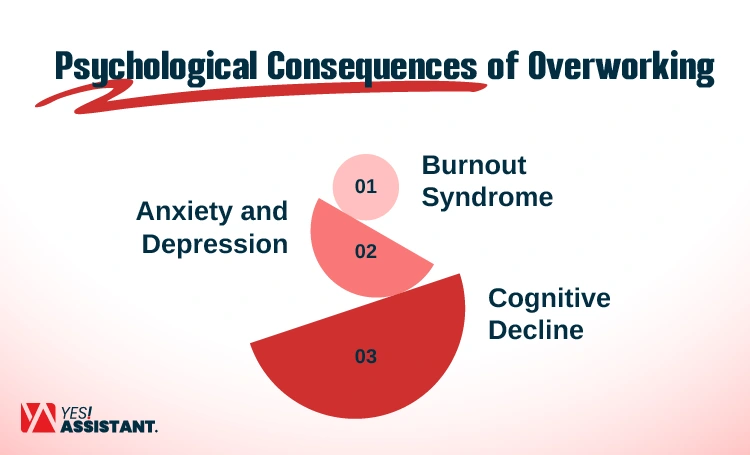
Psychological Consequences of Overworking
When you fear for your limitations, you often push yourself beyond regular working hours. This constant pressure creates a cycle of stress that damages your metal clarity. Overworking destroys the truth about your actual productivity.
Finally, this leads to a complete loss of joy in your career and personal life.
Burnout Syndrome
Long-term stress is a heavy burden on your mind. It leads to a separation between your body and mind that stops working simply. Thereupon, you may detach from your daily tasks, that make you stranger from your own goals.
Overtasking makes you too tired to finish even basic tasks. Too much high stress leads to burnout that takes a long time to recover from the situation.
- Mental Fatigue: You’re feeling tired despite not getting enough sleep.
- Distrust: Overtasking burnout to develop a negative or distant attitude towards your work.
- Decreased efficiency: Taking too much time to complete the tasks once done quickly.
Anxiety and Depression
You stop working but your mind is high-alert “mode”. Therefore, your quick movement on small tasks that make no sense to avoid small mistakes. If you don’t take enough rest, you will feel deep sadness and can enjoy nothing.
- Mental Health Impact: Long-term stress can be aimed at serious clinical anxiety.
- Reduced Resilience: Losing the ability to recover from daily setbacks.
- Emotional Weight: Lead to constant worry about performance.
Cognitive Decline
You may think your mind is unable to generate more ideas. When you consistently engage with too many small tasks, you will be too tired to think outside the box. This focus on you’re spending time on the wrong work much harder to use your brain on generating strategic ideas.
- Impaired Decisions: Making poor choices because the brain is exhausted.
- Reduced Creativity: Finding it difficult to come up with fresh ideas.
- Focus Loss: Struggling to stay on task for more than a few minutes.
Key Psychological Theories and Concepts
When people doubt their skills, they even do overtasks to hide it. This choice creates a deep connection between how you feel and how you engage with more work. Experts use specific ideas to explain why our brains like to stay busy.
These theories focus on why people engage with overworking to secure their positions.
Self-Determination Theory
Compared to your position or nature of job, you lose your big-screens focus due to engaging with a list of small tasks. Understanding these regards help you to explain the cost of poor tasks organization in your company that lower revenue.
- Self-driven action comes from a personal attachment for work itself.
- Outside motivation is driven by the outside rewards like raises, or high status
- Working too many hours for outside rewards leads to engaging with too many tasks.
Cognitive Dissonance
Mental stress happens when you’re doing something against what you believe. If you think you’re a hard worker, you will continue working without taking an interval. To stop this tendency, you should tell yourself that working late is a good thing.
You work long hours to be the person you see in your mind. This mental trick is one of the major time leaks in growing business today.
- This theory has two parts: one is your belief, another happening against your thought.
- People tell themselves stories to make overworking seem like a smart choice.
- It helps a person feel better about skipping rest to finish more work.
Behavioral Conditioning
Behavioral conditioning is like training your brain to follow a specific set of rules. When you finish a hard task and get a good job, your brain wants more. Over time, your mind learns that working more equals getting more positive feedback or safety.
This creates a strong habit that makes it very difficult to walk away from your desk. Your brain becomes wired to see constant effort as the only way to succeed.
- Positive reinforcement makes you want to repeat the same working habits.
- Your brain starts to connect staying late with being a successful person.
- Habit formation makes it feel very strange or wrong to take a break.
Conclusion
Overworking is like passing a long day at the office; it’s a complicated psychological habit. It’s often driven by a fear-based motivation to prove your own worth. From the dopamine reward loops of finishing tasks to the trap of scarcity mindset, your brain becomes wired to stay busy.
However, the cost of the overworking habit is high. It leads to burnout syndrome, emotional exhaustion, and a real decline in your ability to think clearly. Use these psychologists to focus on results instead of busywork.
FAQs
Is Overworking a Mental Disorder?
Overworking is a serious behavioral issue often tied with anxiety and work addiction. This opening gateway that ultimately leads to mental disorder.
What Personality Types Are Prone to Overworking?
People who fill in lack of skills and efficiency; but tending to prove their eligibility, typically prone to overworking.
How Does Overworking Affect the Brain?
Excessive work floods your brain with severe disorders, which weakens your ability to focus, solve problems and manage emotions.