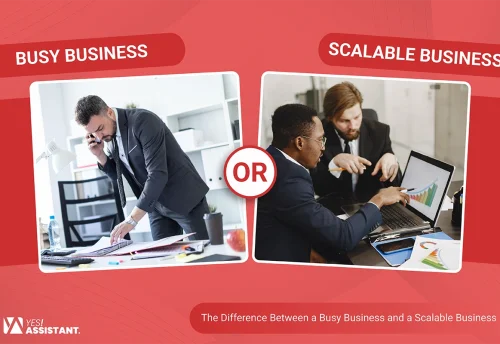


Why Founders Struggle To “Let Go” of Tasks: And How It’s Killing Growth
Many business owners get stuck doing small daily tasks instead of growing their company. Founders struggle to let go of tasks due to identity attachment, fear of quality loss, lack of trust, and absence of scalable systems. This cycle creates a bottleneck that stops your business from scaling in a competitive market.
You must stop acting like a worker and start to contribute like a business leader. Building simple systems is the only way to free your time for big goals. Trusting your team to handle small jobs will help everyone succeed together.
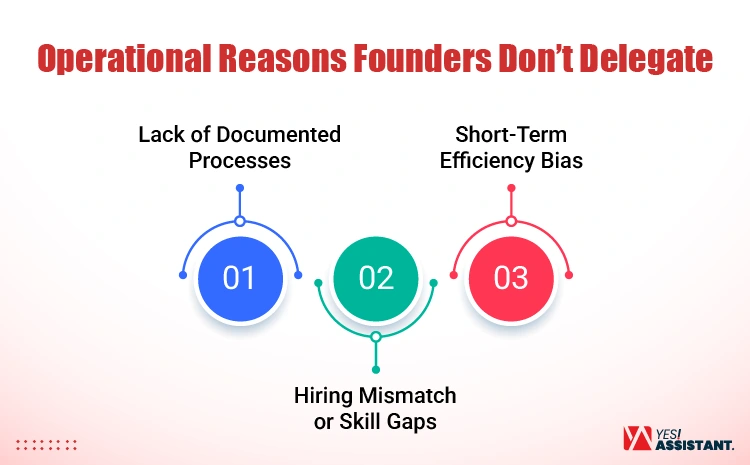
Operational Reasons Founders Don’t Delegate
Many businesses don’t delegate due to bad habits, missing processes, or a weak team structure. Indeed, founders independently face the problem according to their capability. This creates a serious bottleneck as the full system depends on single decisions.
It’s not just about trust; it’s about a structure that completely depends on one person.
Lack of Documented Processes
Staff may perform repetitive tasks upon senior management approval due to the lack of formal written procedures. Thereupon, no one can move to start a new task without the founder’s concern due to the written workflow available. This is the mental tool of daily repetitive works doing the same thing everyday is what actually leads to delegation traps.
Founders Bottleneck & Delegation Traps:
- No step-by-by operational guide.
- Only the founder approves on a task/project basis.
- There’s no team autonomy or scaling.
High Operational Risks:
- Teammates get exhaust if owner busy at meeting
- Knowledge on specific tasks goes when key employees resign.
- Spend much time on repetitive tasks without strategic growth.
Inefficient and Wasted Time
- Repetitive tasks required prior approval instead efficiently start.
- This lead to inefficient resources as task don’t expose skills
- Increase training time and decrease efficiency.
Hiring Mismatch or Skill Gaps
Founders often struggle to delegate because the early hiring team lacks the skill-set, mindset or responsibility to work independently. Besides, while businesses’ hires people without defining roles and responsibility, that sometimes leads to opposite roles. Moreover, when a problem arises, founders try to solve the problems within a single capacity without involving the other members.
Lack of Scalable Opening System
- Start with speed and agility instead of prioritizing structure.
- Tasks delegated without defining clear role and responsibility.
- Without a clear framework, tasks back to the owner’s end.
Reactive Hiring and Misaligned Expectation
- Hiring to solve immediate pain points instead of a strategic plan.
- Quick hiring may lead to misaligned skills and requirements.
- In-skilled hiring results in stopping your delegation process.
The Mindset Problem
- The founder thinks incompetent people will never be a business threat ever.
- Handling all problems leads to brain exhaustion and results “Zero”
- These hiring gaps will become a drain on resources and a waste of money.
As a founder, prioritizing personal speed and skills drains your mind, lower business growth. Smart owners look at big-screens and delegate small tasks to junior staff or outsource a remote assistant services to get out of a stressed situation. This will create a window for building your business vision, mission that values most.
Short-Term Efficiency Bias
Founders prioritize immediate speed over sustainable growth due to a short-term efficiency bias. This sense of bias highlights when owners are doing tasks themselves, thinking faster than identifying effective delegation. Also, founders consider training as a delayed outcome rather than thinking of a quick investment.
Prioritizing Personal Efficiency
- Supervise over small to big tasks considering self speed.
- Personalizing speed blends negative effects on business.
- Prioritize on personal speed blocks long-term scalability.
Viewing Training as a Cost
- After training, founders think employees may switch use for others.
- The owner sees training cost as loss of revenue.
- The founders think of training as an upfront cost, and reduce working time.
Ignoring Long-Term Value
- Companies can grow as fast as founders speed, scaling no long-term goal.
- The employee depends on a single decision resulting in no effective results.
- Hiring staff maintaining low and immediate requirements.
When Founders Should Start Letting Go
You are intended to open a restaurant in a crowded area. You need space, funding, identifying customers, tests, and recognition as your competitors already at your customers heart. In this case, you need to think of hiring staff, funding and start advertising.
Therefore, you need to delegate your staff to small works as you aim at big-screens. You’ll realize how delegation improves your decision quality and grows your business faster.
Signs It’s Time to Delegate
When you find tasks are repetitive by-weeks and the tasks take too much time that slows your decision-making stage. These signs you’re spending time on the wrong work and let you back from strategic focus . Besides, you may heavily engage with basics and low-valued tasks maintaining speed and accuracy, leading to delaying your strategic decisions.
Identify Bottlenecks and Engage with Big-Opportunities
Operation distraction certainly damages your long-term business goal. Thus, you need to address the repetitive bottlenecks and delegate to specific skilled members.
Immediately Step Back from Over-attention to detail
As a founder, you should focus on big-screens rather than moving to quick solvers daily. You can train your potential resources to handle tasks independently without waiting for permission.
Recognize Team-members Who Contributes Most
Delegate your team-mates and follow-up their improvement. Reward your teammate who can lead and complete projects independently.
How Founders Can Effectively Let Go
Business founders always fear delegation considering playing a vital role, skill, and independently working capability. Indeed, before starting delegation it requires building a system on continuous workflows, checklists, outcomes, applying rules and identifying training needs.
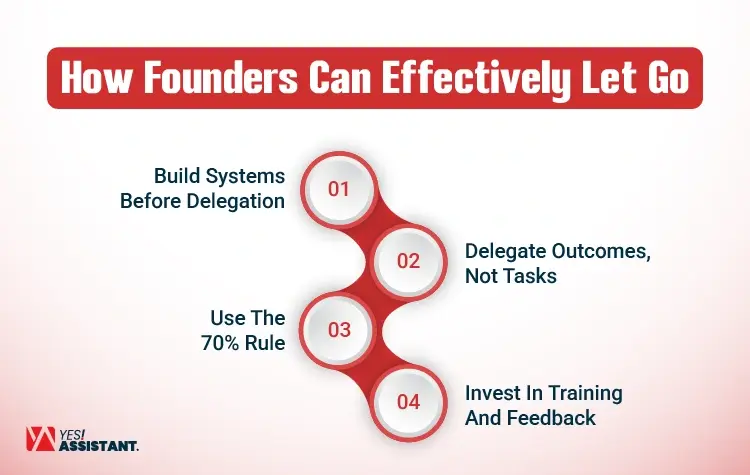
Build Systems Before Delegation
Define clearly about your operation needs, high-impact or repetitive tasks requirements, and fix-up complete workflow. Build a better system create more free time that helps to grow your business. Don’t create messy tasks by avoiding effective plans.
Instead, use a checklist to help you take action step-by-step. Significantly, demonstrate your outcomes through standard success measuring metrics for the tasks or completed projects.
Key Steps to Building System Before Delegation.
- Set and Approve Document Before Delegate.
- Choose High-Value Tasks to Delegate the right person.
- Transfer all belongings to a delegate that gives task direction.
- Recognize key metrics for tracing performance, decision-marking.
Delegate Outcomes, Not Tasks
Many founders assign tasks without defining outcome strategy. Thereupon, team members become stuck in operating the task with no specific outcomes. Remember, you’re just not delegating tasks, you’re the supervisor of the task to check, justify and deliver outcomes.
What are the kye to Delegate Outcomes
- Building trust when your delegates meet deadlines and bring outcomes.
- Typical people only enjoy ownership, but delegates complete tasks with outcomes.
- Business leaders review tasks following vision, risks, and long-term outcomes.
- Maintain business standards that have high-values.
Use the 70% Rule
Track all of your team members who already exceed 70% of the target, and let the member delegate for next-level leadership. Select the right candidate who starts working in object step-by-step improvement instead starts with perfection. Therefore, you’ll be free from your stressful repetitive tasks or solving basic-level problems.
Key Ways to Choose Delegation
- Which tasks you choose to assign candidates before delegation.
- Track person who is intent to develop your organization better
- If you find more candidates, use advanced metrics to identify better ones.
- Start with small tasks to test a candidate’s ability before starting with major tasks.
Invest in Training and Feedback
Delegation is a continuous investment in your human capital. Without a structured feedback loop, your team will repeat mistakes or draft without following core business standards. Effective training strategy ensures that your delegates understand the actual scenario, which authorizes them to make better decisions in your absence.
Expected Outcome to Invest in Training and Feedback
- Set a regular review system to monitor progress that is aligned with goals.
- Build a safe environment for two-way feedback to identify system bottlenecks.
- Provide related guidance that explains the strategic importance of the task.
- Update your training context following SOPs to prevent future knowledge gaps.
Framework: Task Delegation Matrix
To grow your business without burning out, you need a simple way to sort your wok. Stop guessing what to give away. Use this “Value vs. Skill” map to decide what stays on your desk and what goes to someone else.
Categorize Tasks by Value and Skill
Focus on what you do best by passing off repetitive or easy tasks to others by outsourcing or applying technology to automate processes.
- Methods to Retain and Optimize Founders High-Value Works
Find out which task has high-values and belong to the “Big Wins” category. You can only do these tasks because they require your unique vision or a special skill that grows the company.
- What to Do: Focus and dedicate your all efforts here. This is where you can make the most money and grow your business.
- Example of the Task: Closing a huge partnership or setting the 5-year goal for the company.
- Plan for Low-Value/Low-Skill to Delegate Immediately
These are the most simple and easy tasks. Select resources who can handle these easy tasks to learn which take too much time of your day.
- What You Need to Do: Assign these tasks to an assistant or junior team member today.
- Example of the Task: Book meetings, basic data entry, or sorting email from social media.
- Find Performers Based on High-Value/Low-Skills for Train or Hire
There are a bunch of performers working in your company or applied diversified skilled people for the same position. Choose delegates from the people who are already in your hand or need to hire. Assign them tasks that are very important for business, but you don’t have time to do these.
- What You Should do: You shouldn’t do these tasks which are easy but take long hours. Hire an expert or spend time training a talented team member to take over.
- Example of the Task: Complex legal paper work, advanced coding, or High-level task strategy.
- Ways to Automate or Outsource High-Skills and Low-valued Resource
You are great at these tasks, but they don’t help the business grow. Significantly, performing these tasks is a waste of your talent.
- What Should You Do: Set an automated software to do the repetitive jobs or hire freelancers to handle your tasks.
- Example of the Task: Editing a weekly video or formatting a recurring report.
Conclusion
Building a great business requires engaging with strategic work and starting leading the business. Most of the founders use delegation matrix to focus on high-value work that actually grows your company. So, trust your system to turn your job into a scalable one and establish a successful brand.
For this reason, hand over your small tasks to a skilled teammate, so you can reclaim your creative freedom. So, start today by delegating every small task and see how much more you can achieve.